
Launching a new SaaS product is one of the most exciting—and risky—moves a founder can make. A fully developed platform takes serious time and investment, and guessing your way forward is a fast track to wasting both.
That’s where a SaaS MVP comes in.
A SaaS MVP (minimum viable product) allows you to build and launch the simplest version of your product that solves a meaningful problem for real users. A well-built MVP gives you proof of value, early traction, and a focused roadmap for what comes next.
In this guide, we’ll walk you through every step of the SaaS MVP development process—from vetting your idea and prototyping to feature prioritization, launch, and iteration.
If your goal is to launch a high-impact product without overbuilding or stalling out, you’re in the right place.
I've sat in on a lot of first-launch conversations with SaaS founders. The ones who get the MVP stage right almost always do one unglamorous thing early: write down, in one sentence, what they're not building yet. The founders who skip that step usually end up building it all anyway, just slower, and without much clarity about why.
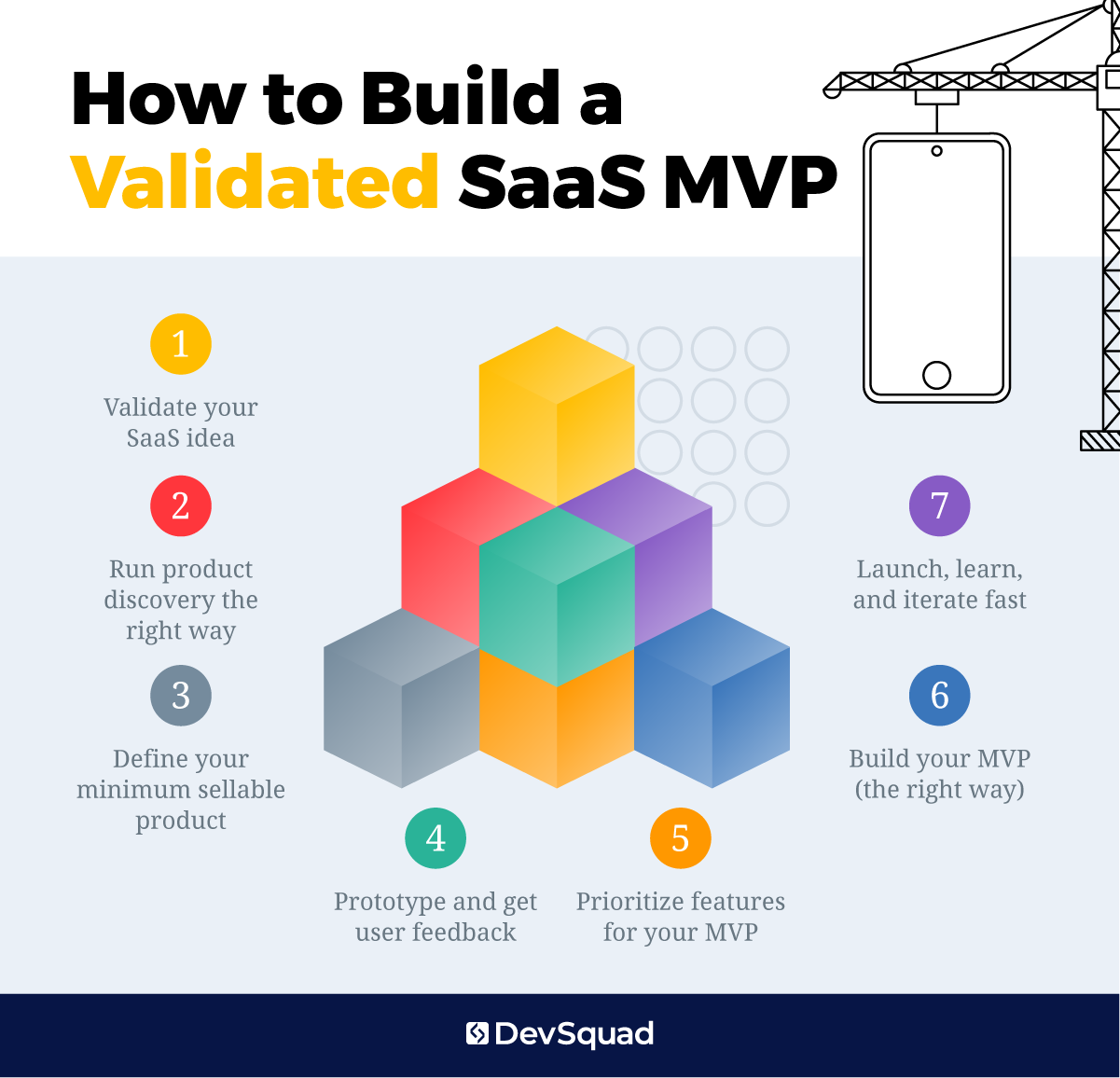
1. Validate your SaaS idea
The foundation of every successful SaaS MVP is a thoroughly validated idea. Skipping this step is one of the fastest ways to waste time, money, and momentum. Before you start building anything, make sure you understand how to validate a software product because your job is to prove that a real problem exists—and that your product is the right solution for the right market.
Talk to your target users
The fastest path to clarity is direct conversations. Talk to 5-10 people who match your ideal customer profile. Ask about their current workflows, frustrations, and the tools they’re using. Do not pitch your idea. Instead, investigate the problem. If they mention the pain you’re trying to solve—unprompted—you’re onto something.
Use these interviews to understand:
What’s broken or inefficient in their current process
What workarounds they’ve adopted
What they’re already paying for (if anything)
This is the most effective way to confirm that your product will serve a real and urgent need.
Size the opportunity
Once you validate the problem, evaluate the market. Is this a niche SaaS MVP that solves one specific problem for a small group? Or are you targeting a broader vertical with more competitive players?
Understanding market size and dynamics helps shape what kind of MVP you build. For underserved markets, robust feature sets can help carve out a dominant position. For overserved, mature markets, a minimum sellable product that does one thing extremely well can gain traction faster.
Use tools like LinkedIn Sales Navigator, Crunchbase, or Apollo to estimate your total addressable market. Look at how many businesses or users experience the problem you’re solving.
Test with landing pages and prototype feedback
Before writing code, you can test interest with a simple landing page. Describe the core benefit of your SaaS MVP and offer an email sign-up. You’ll get early signals on demand and can follow up with those leads later for deeper conversations.
Better yet, run a product discovery workshop to align your team and crystalize your assumptions. Workshops uncover blind spots, validate priorities, and prepare your roadmap for the next stage.
And remember, Validation is a cycle. You validate your idea, then validate your prototype, then validate the MVP. But everything starts with the first conversation.
2. Run product discovery the right way
Once your idea is validated, the next step in SaaS MVP development is product discovery. This is where you move from a broad concept to a defined product. It’s where strategy meets structure. And when done well, it prevents costly detours down the line.
What is product discovery?
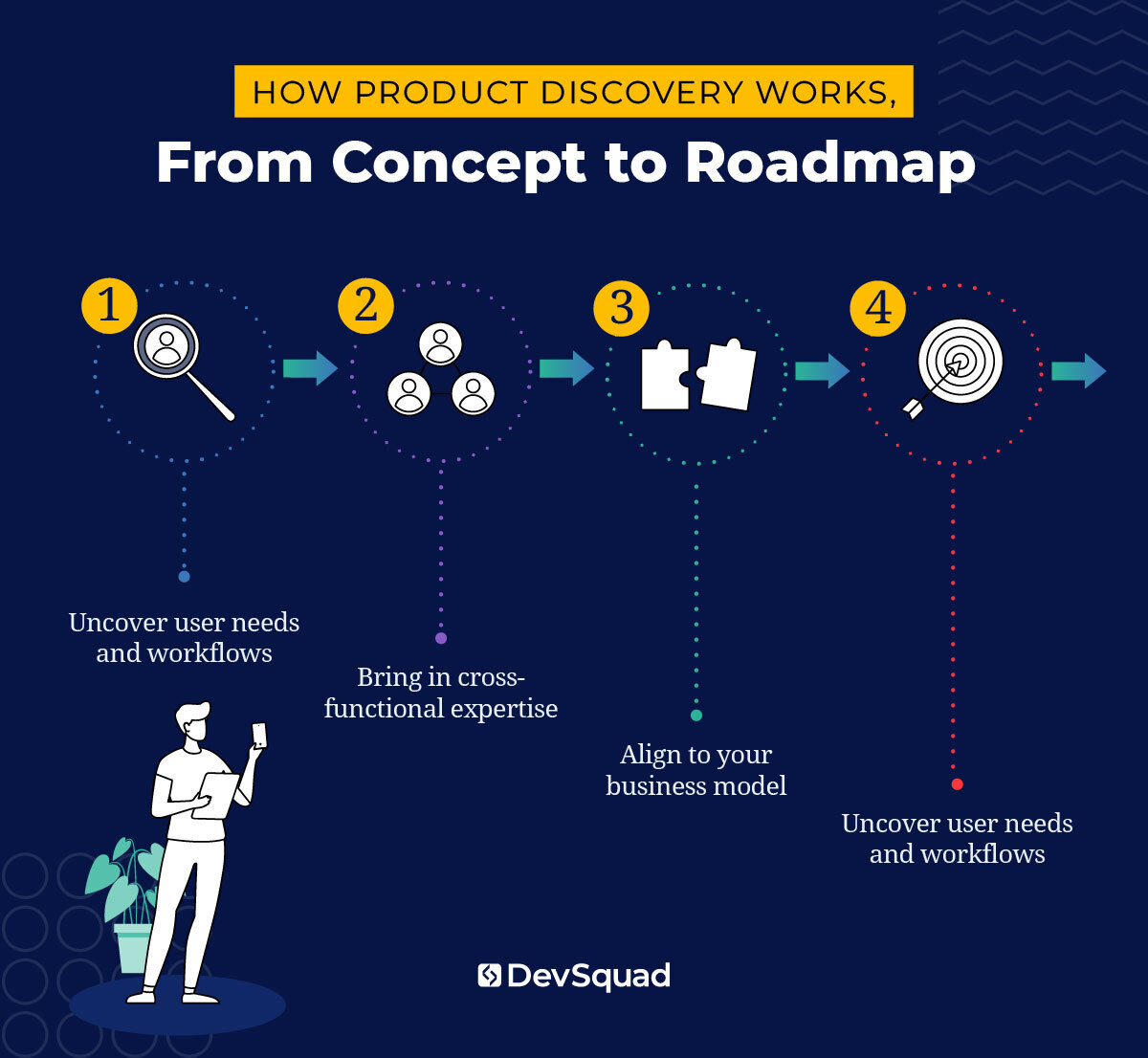
Product discovery is the structured process of deciding what to build and why. At this stage, your team should be laser-focused on uncovering:
Core user needs and workflows
Product assumptions that still need testing
Business goals that the product must support
This isn’t about writing feature lists. It’s about surfacing the most valuable use cases and mapping the journey your user takes to achieve them. Without this clarity, even a talented development team will spin its wheels.
Involve cross-functional expertise early
At DevSquad, cross-functional teams are the core of our business model. Each squad combines strategy, product management, design, and engineering to guide founders through a streamlined SaaS MVP development process.
When it comes to discovery, our squads lead founders through a focused 30-day discovery sprint to establish:
A validated high-fidelity prototype
A technically feasible roadmap
A practical go-to-market plan
These early deliverables help product owners make confident decisions and avoid expensive rework later on.
A cross-functional team is also uniquely positioned to help identify the right product discovery framework based on your SaaS model.
Align your product with your business model
Discovery is also the best time to define what success looks like. Are you creating a product that will be sold via a sales team? Or will users discover and adopt it on their own through a self-serve model?
For example, a minimum sellable product that supports product-led growth might require a slick onboarding experience and self-explanatory UI. A sales-assisted product might require features like admin controls or integrations that help close deals.
The answers to these questions impact what features make it into the MVP—and what gets pushed to later versions.
Think in outcomes, not features
A strong product discovery process centers on user outcomes, not just functionality. Asking the right product discovery questions will definitely help with this. Questions like:
What is the most frustrating part of your current workflow?
What happens if this problem remains unsolved?
Would you be willing to pay for a solution to this problem? If so, how much?
Use discovery tools to visualize how users get from point A to point B. And reference your earlier interviews to validate that you’re solving for the right stages.
Your SaaS MVP can’t be everything. But it has to be the right thing. And product discovery is where that clarity begins.
3. Define your minimum sellable product
A minimum viable product (MVP) is often misunderstood. It’s not just the smallest version of your product—it’s the smallest sellable version. That distinction is critical when building a SaaS MVP that can drive real traction.
Your goal isn’t just to launch fast. Your goal is to deliver something users will actually pay for, use consistently, or both. This is your minimum sellable product (MSP), and defining it correctly is what separates successful SaaS MVP development from costly misfires.
Focus on your core value proposition
At this stage, it’s tempting to brainstorm a wide set of features. But your job is to understand product value and narrow in on the one result your product must deliver. Strip your concept down to its most essential promise. That is the transformation your user expects after using your product.
"I've learned that a good first version should stay focused, solve the core problem well, and make people's work easier." — Thainê Ethur, Product Designer, DevSquad
Ask yourself:
What’s the one job this SaaS product must accomplish from day one?
What action will prove that we’ve delivered real value?
What part of the user journey absolutely must work from the start?
Everything else is secondary.
By focusing on one core value proposition, your team can ship faster, test earlier, and cut through distractions.
Polish the user experience
Your MVP for SaaS startup needs to be beautiful on the front end. Modern users judge software immediately. Even your earliest users expect a clean, intuitive experience that reflects confidence in your product. You can get away with a lightweight backend, but the user interface must look and feel right from the start.
If the user journey is clunky, you risk losing potential customers before they experience the value. Prioritize visual clarity, intuitive navigation, and responsiveness—even if some features are only partially implemented behind the scenes.
A minimum sellable product must feel real and reliable, even if the underlying code is held together with duct tape and ambition.
Some teams call this building a Minimum Lovable Product instead of just a minimum viable one. The features can be thin, but the parts users actually touch should feel like someone cared.
"I like to focus on functionality without leaving aesthetics behind. Small moments of delight can go a long way in making the experience feel more thoughtful and engaging." — Thainê Ethur, Product Designer, DevSquad
Don’t over-engineer for scale
Avoid the trap of building infrastructure for a scale you haven’t reached. At the MVP stage, you don't need enterprise-ready architecture. You need just enough backend functionality to support core workflows and test real user behavior.
Instead of building for every potential use case, build for your first 10 paying customers. Let their feedback guide what comes next.
Use frameworks to define scope
There are many feature prioritization frameworks to help you define scope. Choosing the right framework depends upon your SaaS model and target market. For instance, if you're building a vertical SaaS MVP versus a horizontal SaaS MVP the framework that best represents your approach could differ.
In general, the now/next/later roadmap is a powerful tool for managing scope. Define exactly what will be delivered in the MSP (now), what will follow after feedback (next), and what could come in future releases (later). This keeps the team focused and helps manage stakeholder expectations.
 Source Productstride
4. Prototype and get user feedback
Before writing a single line of production code, your team should build a realistic prototype and start collecting feedback. Prototyping is a critical step in the user experience design process of SaaS MVP development because it allows you to test the product’s value and usability without committing engineering resources.
A good prototype helps you validate your user flows, refine your UI, and surface deal-breaking flaws early and cheaply.
Build a high-fidelity prototype
Your prototype should reflect the final design and user experience of the minimum sellable product. This means polished UI, clickable navigation, and realistic workflows, even if the backend logic isn’t functional yet.
Tools like Figma or Adobe XD allow your design and product teams to simulate how the product will look and behave. And because the experience feels real, users can interact with it naturally, giving you far more accurate feedback.
At DevSquad, we strongly believe that the high-fidelity prototype is a cornerstone in the MVP development process. It’s one of the most powerful deliverables you can walk away with before committing to full development.
Test the prototype with your target users
Once you have a clickable prototype, it’s time to test it with the same types of users you interviewed during validation. This step is essential to your MVP development strategy, especially for SaaS startup teams that want to move fast without building the wrong thing.
Here’s what to watch for in prototype testing:
Are users intuitively able to complete the core task?
Do they click where you expect them to?
Are there moments of confusion or hesitation?
Do they understand the product’s value within the first 30 seconds?
Let users speak freely as they interact with the prototype. Avoid leading questions. You’re not testing their knowledge—you’re testing your product.
Iterate before you build
The insights you gather from user testing should directly shape the final scope of your SaaS MVP. You may discover that a core flow needs to be simplified, or that a feature you thought was essential can actually be postponed.
In some cases, user feedback may even prompt a slight pivot in how your product solves the problem. That’s a win, not a setback.
Early feedback in SaaS MVP development is fuel for iteration. And iterating at the prototype stage is far less expensive than making changes once development is underway.
5. Prioritize features for your MVP
Once you’ve validated your prototype with real users, it’s time to define what actually goes into the first build. This is one of the most strategic steps in SaaS MVP development—choosing what to build now, what to postpone, and what to cut entirely.
You don’t need more features. You need the right ones.
Use the “jobs to be done” lens
.png)
To build a SaaS MVP that delivers value immediately, prioritize features based on what users are trying to accomplish. What job are they hiring your product to do?
Map every feature idea back to this question:
Does this feature help the user complete the core job?
Is it critical to achieving the promised outcome?
Would the product still solve the problem without it?
If a feature doesn’t support the core job, it belongs in your later column—not your launch version.
This mindset helps you build a minimum sellable product that is small, focused, and high-impact.
Apply structured prioritization methods
Founders often get stuck debating features based on opinions. Structured frameworks bring clarity.
Some of the most effective prioritization tools for MVP in SaaS include:
MoSCoW: Classifies features as Must-have, Should-have, Could-have, or Won’t-have.
RICE: Scores features based on Reach, Impact, Confidence, and Effort.
Kano model: Categorizes features into Basic, Performance, and Delight, based on customer satisfaction.
The right framework depends on your product, timeline, and business goals. What matters most is choosing one and applying it consistently across your roadmap.
Avoid feature bloat, especially for v1
One of the most common mistakes in SaaS MVP development is trying to ship a “complete” product instead of a focused one. Extra features dilute your message, delay your launch, and increase development complexity.
Instead, build around the single most important workflow. Every additional feature must justify its place by contributing directly to that workflow or dramatically improving user experience.
A minimum sellable product doesn’t mean an underwhelming product. It means a tight, compelling version of your vision that customers understand and want.
Once you’ve prioritized your features, you’re ready to build with clarity—and without second-guessing every product decision along the way.
6. Build your MVP (the right way)
With your scope defined and features prioritized, it’s time to build. Don’t think of building as throwing code together as quickly as possible. This is about creating a tight feedback loop between discovery and delivery, and executing with a team that can adapt fast.
The way you build determines whether you launch on time, stay on budget, and deliver something customers actually use.
Use dual-track agile to move fast without guessing
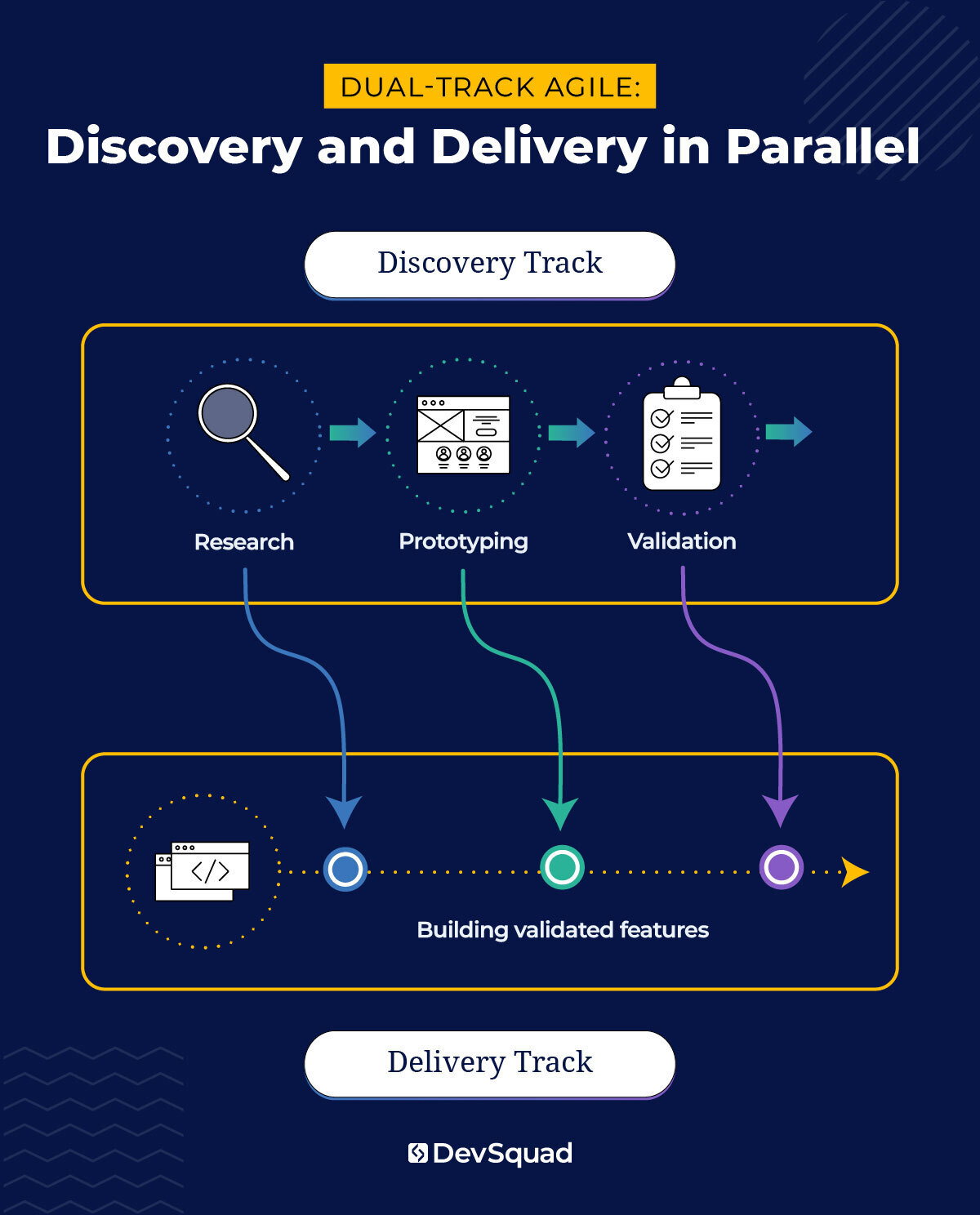
Dual-track agile is a development approach where discovery and delivery happen in parallel. While one part of the team builds validated features, another part explores what to build next.
This structure allows you to:
Keep product decisions connected to real-time learning
Adapt to new insights without derailing current development
Maintain momentum without losing sight of strategy
Rather than batching all discovery upfront, dual-track agile allows for continuous research, prototyping, and validation alongside development. The result is faster iteration with fewer costly reworks.
Build with a modular mindset
To support rapid change, your MVP should be built with flexibility in mind. Use proven frameworks, pre-built components, and clean architecture to create a system that’s easy to extend—or pivot.
Modularity speeds up development, simplifies testing, and reduces technical debt. It also allows your team to focus on delivering core functionality without getting buried in complexity.
You don’t need enterprise-grade infrastructure at this stage. You need a lean foundation that’s stable, scalable, and adaptable.
Bake in quality from the start
Speed is important, but a buggy MVP can sabotage early traction. Basic test coverage, code reviews, staging environments, and version control should be in place even during early development.
Quality assurance and DevOps practices may seem like overkill in the MVP phase, but they prevent bottlenecks and late-stage fire drills. A reliable MVP builds trust—both with users and your internal team.
Build version one like it’s version two
Your first version should look and feel like a real product, even if it only does one thing. A clean UI, responsive interactions, and intuitive workflows matter—especially in SaaS, where users expect polish.
Think of your MVP not as a rough draft, but as a focused solution. What were talking about is maximum clarity.
Building the right way means making smart tradeoffs, staying close to your users, and keeping product discovery alive throughout development.
Build lean, build modular, and build with users in mind.
7. Launch, learn, and iterate fast
Your MVP is live. Now what? This is where many SaaS founders stall out—waiting for perfect traction, obsessing over feature requests, or scrambling to fix every bug. But the post-launch phase is about learning fast and moving forward with intent.
SaaS MVP development doesn’t end at launch. It evolves with every user interaction.
Monitor behavior, not opinions
User feedback is important—but behavior is more honest. Use analytics to track how users engage with your product:
Are they completing the core workflow?
Where are they dropping off?
Are they returning after first use?
Look for signals of value, not just volume. A small group of users who rely on your product daily is far more valuable than a larger group that logs in once and disappears.
Session recordings, heatmaps, and funnel analysis can uncover friction points you wouldn’t catch from surveys alone.
Balance qualitative and quantitative feedback
In addition to behavior data, talk to users—especially early adopters. Their insights can surface missing context behind usage patterns, reveal unmet needs, and inspire your next round of improvements.
Don’t ask what features they want. Ask what they’re trying to accomplish, and what obstacles they face inside your product.
This is where qualitative interviews and lightweight surveys add depth to the analytics picture. Combining both streams of feedback leads to smarter iteration.
Continue running dual-track agile
The post-launch phase is where dual-track agile really shines. While the delivery team is refining existing features, your discovery track should continue exploring what’s next.
That might mean validating a new use case, reworking an underperforming flow, or testing an onboarding experiment.
The key is to maintain a steady rhythm:
Learn from users
Prototype improvements
Build what works
Repeat
You’re no longer guessing. You’re responding to real behavior with strategic iteration.
Define what success looks like
You don’t need thousands of users to declare your MVP a success. What you need is engagement, retention, and clear product-market signals. Know what SaaS metrics are important to you.
Some key KPIs to watch in the post-launch phase include:
Activation rate: The percentage of new users who complete the core action (e.g., scheduling a meeting, creating a project, running a report). This shows that users understand the product’s value.
Retention rate: Track how many users return after day 1, day 7, and day 30. Strong retention signals that your product is becoming a habit.
Daily or weekly active users (DAU/WAU): Usage frequency reveals how essential the product is to your target workflow.
Time-to-value: How long does it take new users to experience the product’s core benefit? The shorter the time, the higher your chances of conversion and retention.
Net Promoter Score (NPS): While not a behavior-based metric, it provides insight into customer satisfaction and referral potential.
Depending on your business model, you may also track early revenue or conversion KPIs like:
Free-to-paid conversion rate
Monthly recurring revenue (MRR)
Customer acquisition cost (CAC)
You don’t need to hit aggressive benchmarks yet. But you do need a clear feedback loop—where user behavior is telling you that the product delivers consistent value.
If your KPIs show that users are activating quickly, sticking around, and getting value from the product, you’re no longer guessing. You’ve got the foundation to scale.
SaaS MVP examples
No founder launches a perfect product on day one. The most successful SaaS companies—and the ones scaling today—started with focused MVPs designed to test real user demand. Below are five examples that show what it looks like to build a SaaS MVP the right way, across industries and growth stages.
Each example highlights a different path to validation, launch, and iteration.
Before diving in, it helps to know these examples aren't all the same type of MVP. Four common patterns show up most often in SaaS:
Landing Page MVP: a page describing the product with a signup form, testing demand before anything is built.
Concierge MVP: the founders manually deliver the value themselves before building software to automate it.
Single-Feature MVP: one workflow, built deliberately narrow, instead of a full feature set.
Prototype MVP: a clickable, non-functional design used to validate direction before real development starts.
Here's which pattern each example below actually followed, including two that don't fit neatly into just one.
Buffer: a single feature and a landing page
Landing Page MVP. Clean fit, literally a landing page and a signup form before any product existed.
Before writing a line of backend code, Buffer founder Joel Gascoigne launched with nothing more than a landing page. It explained the product’s value—scheduling social media posts—and included a signup form.
 Source: Idea to Paying Customers in 7 Weeks: How We Did It
Once people started signing up, Joel followed up to ask if they’d pay for it. When enough said yes, he built a working MVP.
Buffer’s SaaS MVP was ultra-minimal, but it confirmed real interest. That validation allowed them to build the right product instead of guessing.
BoosterHub: turning pain into a product
Hybrid: Prototype MVP to Single-Feature MVP. It started as a prototype validated through an in-person design sprint. It then launched scoped down to one tight feature set (communication, payments, scheduling). Two types in sequence, not one.
Robin Eissler, founder of BoosterHub, started with a common but chaotic pain point, managing school booster clubs. Fragmented tools, cash payments, and volunteer coordination made it nearly impossible to run efficiently.
With no software experience, she participated in an in-person design sprint to map user needs and prototype a solution. After getting validation from her target audience, the first version of BoosterHub launched within 6 months.
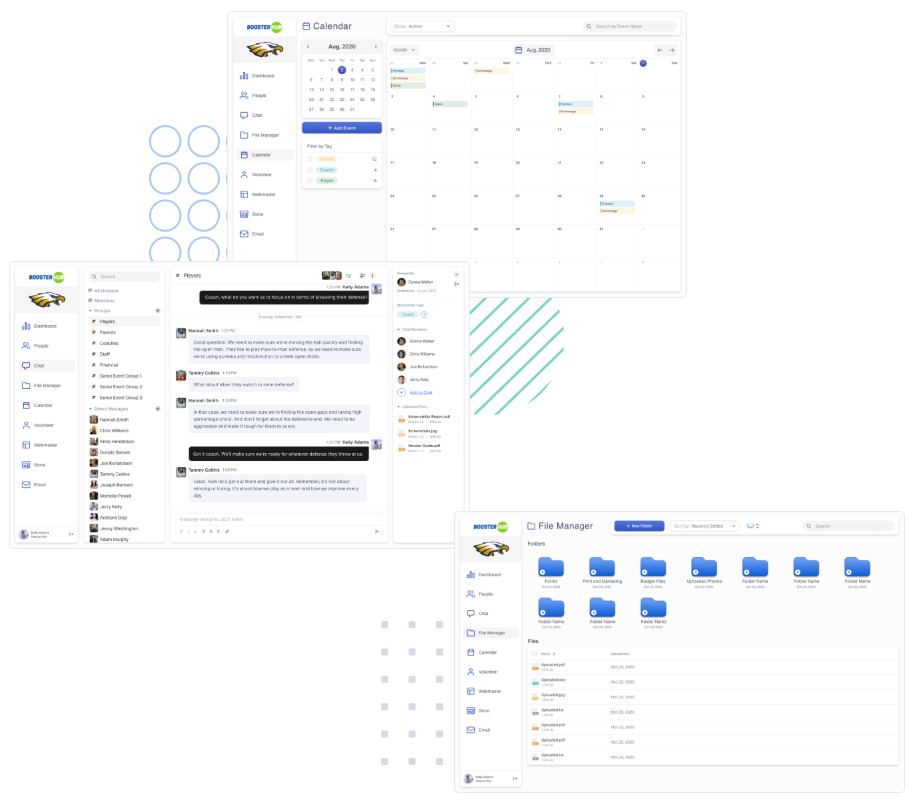
It focused only on core functionality including streamlining communication, payments, and scheduling. That minimum sellable product quickly expanded to over 10,000 users and millions in annual transactions.
Airbnb: test demand before building inventory
In 2007, the Airbnb founders tested their idea by renting out air mattresses in their own apartment. They launched a basic website and used the Democratic National Convention in San Francisco as a catalyst to attract early users.
There was no payment system, no real inventory, and no full product. But that didn’t matter. They proved people were willing to stay in strangers’ homes, and hosts were willing to list.
 Source: AirBed And Breakfast Takes Pad Crashing To A Whole New Level
Airbnb’s MVP was less about software and more about proving a behavior change was possible. Once that was validated, they invested in building the platform.
StatSocial: building a modern UI that sells
Hybrid: failed templated build to Prototype MVP. Their first internal attempt was closer to an off-the-shelf-style build that fell short. The real MVP work only began once they pivoted to a proper prototype-and-validate process. Labeling it a clean "Prototype MVP" alone would erase the more useful part of the story: the failed first attempt.
StatSocial’s team had already validated the market for advanced social insights. But when they attempted to build a new platform, Silhouette, internally, the templated UX fell short.
They pivoted to a strategic MVP process: defining core user outcomes, designing a tailored interface, and launching within six months.
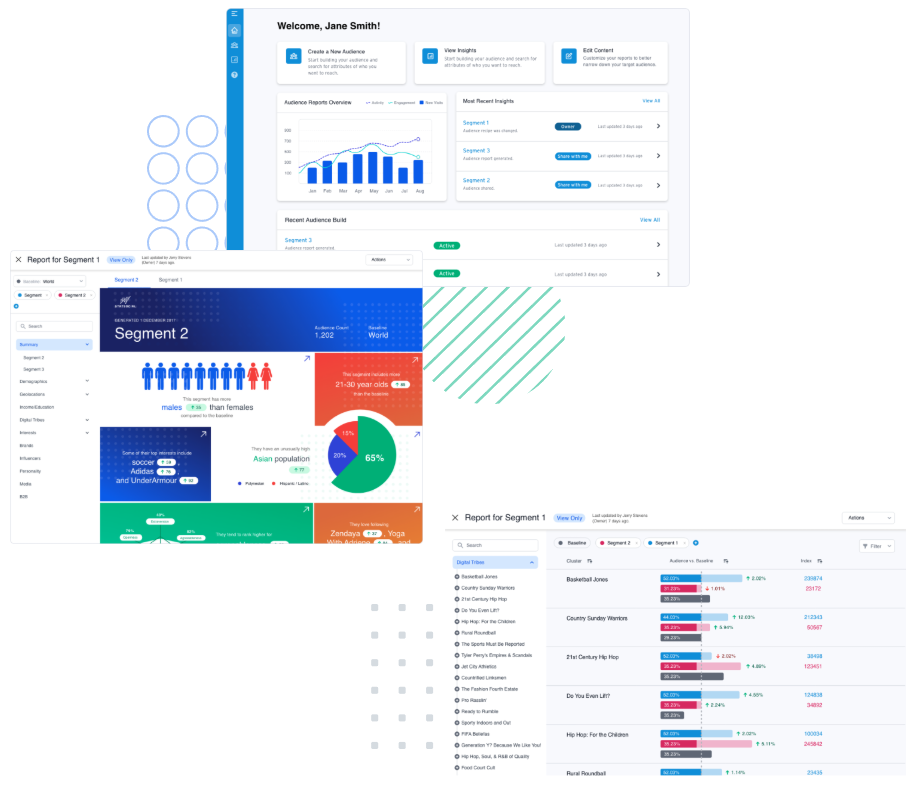
That minimum sellable product gave existing customers immediate value, and created a springboard for feedback-driven iteration. StatSocial avoided overbuilding and reduced time to market by more than a year.
IsoTalent: a recruiting platform that wins deals
Single-Feature MVP. Clean fit, built deliberately around one workflow (pipeline transparency) instead of competing with full legacy ATS feature sets.
Recruiting firm IsoTalent needed a way to give clients visibility into their talent pipeline. They storyboarded the idea during a design sprint, prototyped the experience, and launched a usable SaaS MVP (IsoConnect) in six months.
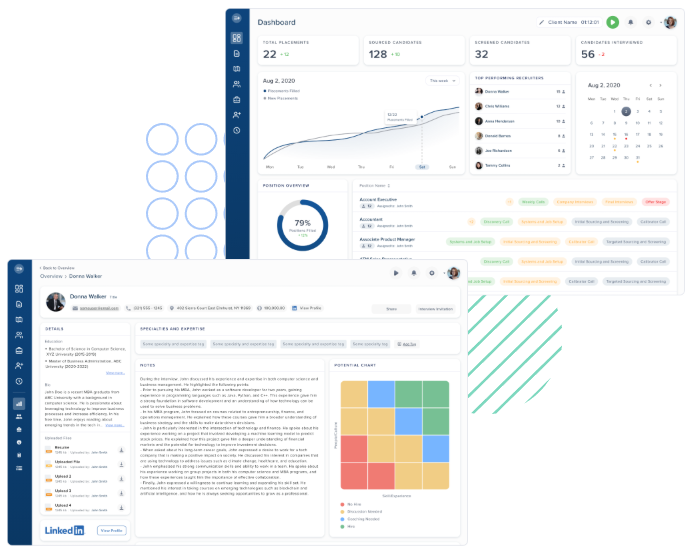
The platform now serves as a key differentiator in their service model, and the MVP itself helps close new business. Rather than trying to compete with every feature of legacy applicant tracking systems, they focused on the one workflow clients truly cared about: transparency.
9. Avoid these common mistakes
Even with the right idea, the wrong execution can slow you down, or derail your product entirely. These are the most common mistakes founders make during SaaS MVP development, and how to avoid them.
Building too much, too soon
One of the most frequent missteps is trying to build a full-featured platform out of the gate. It’s tempting to think that more features will increase appeal, but it usually leads to a bloated product with unclear value.
Remember to focus on the minimum viable product: a version that solves one core problem cleanly and allows for fast iteration based on real feedback.
Skipping validation
Many founders fall in love with their idea and assume others will too. But skipping user interviews, market research, or prototype testing leads to blind development. Even one or two discovery calls can surface insights that radically shape your direction.
If you’re not talking to users, you’re guessing. Validation is not a luxury.
Ignoring user experience in the name of “MVP”
It’s a myth that MVPs can get away with clunky UX. In today’s SaaS environment, users have high standards, even for early-stage products. If your product looks and feels unpolished, it erodes trust and increases churn.
Invest in a smooth, intuitive interface, even if the backend is barebones. People judge software by how it feels, not just what it does.
Treating launch like the end goal
Shipping your MVP is a milestone, but it is in no way the finish line. The real work begins after launch: tracking behavior, gathering feedback, and iterating with purpose.
If you treat your MVP like a static release, you’ll miss the opportunity to learn and adapt. Launch with analytics, interviews, and a plan for ongoing improvement.
Waiting for perfect
Trying to launch a flawless product is the fastest way to delay indefinitely. SaaS MVP development is about learning, pivoting, and adapting. Perfection should never get in the way of progress.
Ship when it works, not when it’s finished. Your early users will shape the best version of your product.
Frequently Asked Questions
A SaaS MVP (minimum viable product) is the simplest version of your software that solves a core user problem and delivers real value. It's built to test demand, gather feedback, and begin generating traction. All without overbuilding or investing in unnecessary features.
Most SaaS MVPs take 4 to 6 months to build when using a dedicated product team that includes strategy, UX design, development, QA, and DevOps. Timelines depend on the complexity of your product and how quickly you validate the direction with users.
The right development partner will clarify expected costs after discussing your product goals, business model, and technical requirements. MVP pricing depends on scope and team composition. For real monthly numbers and what each stage costs, see our guide to SaaS development cost.
A prototype is a clickable design used to test usability and gather early feedback. An MVP is working software, built with real code, that users can interact with and (ideally) pay for. Prototypes validate direction; MVPs validate the solution.
There's no one-size-fits-all stack. Popular frameworks like Laravel, React, and Node.js are common for SaaS MVP development. The best tech stack supports fast iteration, is easy to maintain, and fits your product's specific needs and user experience goals.
Hire a product team when you need to move quickly, lack in-house expertise, or your internal team is focused on other priorities. Bringing in outside experts helps you move forward without disrupting current operations or slowing down progress elsewhere.
The launch is just the beginning. After releasing your SaaS MVP, track usage, collect feedback, and iterate based on real behavior. This is where continuous development and dual-track agile help you improve rapidly and grow with confidence.
An MVP proves that a feature or workflow works. A Minimum Lovable Product goes one step further. It adds the small moments of care and visual polish that make people actually want to use it, not just tolerate it. You don't need every feature to be lovable on day one, but the one or two things users touch most should be.
It depends on what you're trying to learn. Charging early, even a small amount, can be one of the most honest validation signals available. People vote with their wallets differently than they vote with a signup form. But if you force monetization before your core value proposition is proven, you risk biasing your early feedback.
Ready to build a SaaS MVP? Learn more about our MVP development services. Once you've validated and you're ready to build the full product, our SaaS development guide covers build vs. buy, pricing, and real case studies.

Phil Alves is the CEO and Founder of DevSquad and DevStats. He’s built and launched 100+ software products for bootstrapped founders, fast-growing startups, and enterprises. Phil writes about SaaS, product strategy, operational complexity, and building scalable development processes. He enjoys aviation, investing, and learning from other SaaS founders.