
Solid transportation teams don’t struggle because they lack effort. Shipment delays, manual routing, disconnected tools, and constant check-calls create daily friction that slows everything down. Legacy platforms add even more complexity, forcing teams to work around outdated workflows instead of focusing on moving freight.
Custom TMS software solves these problems by giving you technology built for the way your operation actually runs. When your routing, dispatch, billing, and visibility tools work together in one streamlined system, your team spends less time fighting process breakdowns and more time keeping freight on schedule.
This guide walks through what a custom TMS is, why organizations invest in one, the use cases and features that matter most, and how the development process turns operational challenges into a scalable, long-term solution.
What is custom TMS software?
Custom TMS software is a transportation management system built around your exact logistics workflows. Instead of adapting to a rigid, feature-heavy platform, your team gets a solution that reflects your processes, data, and terminology. This makes daily tasks—like planning routes, managing loads, coordinating drivers, and tracking shipments—faster and more intuitive.
We all appreciate simple, efficient tools, and poor UX slows teams down and creates frustration. With a custom TMS, the interface and workflow are designed to match how your operation runs, be it where you are currently at or where you're trying to go. The result: reduced training time and improved adoption across teams.
Custom transportation management software also eliminates the limits of aging systems. Many logistics organizations still depend on legacy tools that are costly to maintain and difficult to evolve. These systems create bottlenecks as your operation grows and become higher risk over time. A custom TMS gives you modern architecture, the right integrations, and the ability to expand features as your business needs change.
Top reasons to consider custom transportation management software
A custom TMS gives logistics organizations more control, better visibility, and a platform that matches the reality of their operations. While off-the-shelf tools can work for simple workflows, scaling will come with the cost of features not tailored to your growth.
Here are the top reasons investing in custom transportation management software is worth considering:
You get workflows tailored to how your operation actually runs: Generic platforms force teams to bend their processes around rigid features, while a custom system supports your routing, dispatch, billing, and planning workflows without workarounds.
You eliminate the limits of legacy systems: Many transportation teams still depend on aging tools that slow down growth and require constant manual intervention. Legacy systems become costly to maintain over time and introduce operational risks.
Your teams gain a cleaner, more intuitive user experience: Poor UX leads to frustration, errors, and reduced productivity. When your software mirrors your terminology and workflow, adoption is faster and daily operations are smoother.
You improve route planning, fleet management, and logistics tracking: Custom tools allow you to design routing logic, driver assignments, and real-time visibility features that fit your specific fleet and service model.
You gain meaningful automation that removes repetitive tasks: Rather than relying on generic automation rules, you can build triggers, alerts, and integrations that align with how your dispatchers, drivers, and customer service teams work.
You use integrations that match your tech ecosystem: Whether you need connections to telematics providers, electronic logging devices (ELDs), ERP systems, customer portals, or freight marketplaces, your system can integrate without costly middleware or patchwork solutions.
You future-proof your technology with scalable TMS software development: Modern frameworks and modular architecture make it easier to add new features, support new business lines, and adapt to regulatory or market changes without starting over.
You strengthen operational visibility across the business: A custom TMS can surface the exact KPIs, capacity data, cost structures, and customer insights your team needs—no digging through generic dashboards or exported spreadsheets.
You gain a long-term competitive advantage in your market: With a custom TMS, you’re not relying on the same generic workflows and limitations as your competitors. Instead, you’re shaping transportation solutions that let you move faster, offer better service, and adapt to new opportunities before others can.
You spend less than maintaining subscriptions: AI assisted development has improved development efficiency, those cost savings are passed on to you making software more affordable than ever.
9 use cases for custom TMS software
When you consider the development of custom software, the possible uses are as broad as approaches to running a business. For TMS software this is also true, but there are some specific use cases that really shape the software to match the industry.
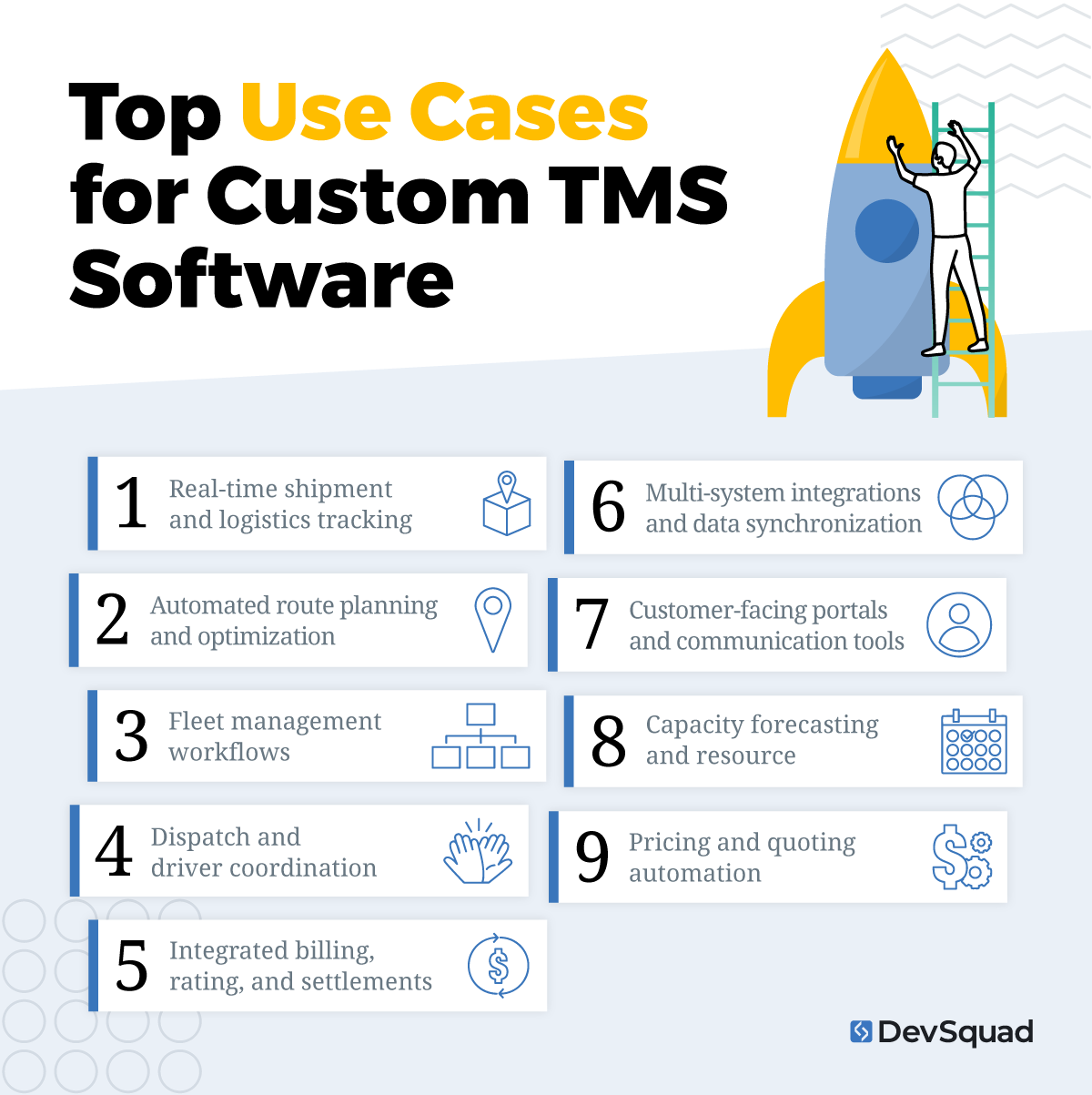
1. Real-time shipment and logistics tracking
Every logistics operation needs visibility, but not every team needs the same alerts, data points, or exception rules. A custom TMS lets you shape real-time tracking around your service model—from live GPS updates to geofenced notifications to customer-specific reporting. This makes logistics tracking more accurate and more useful across dispatch, customer service, and account teams.
2. Automated route planning and optimization
Routes vary based on freight type, customer expectations, geographic constraints, and driver availability. Off-the-shelf routing tools rarely match how fleets actually operate. With a custom solution, you can bake in your own optimization logic, time-window rules, regional constraints, and backhaul opportunities. This reduces miles, fuel costs, and manual decision-making.
3. Fleet management workflows
Carriers and private fleets need tools that mirror their asset mix and maintenance strategy. By building fleet management software that fits your vehicles, trailers, service schedules, and inspection workflows, your team gets clearer insight into asset readiness and utilization. This helps prevent downtime and keeps repair data out of spreadsheets.
4. Dispatch and driver coordination
Dispatch is the heartbeat of any transportation operation. A custom TMS supports dispatchers with workflows built for your equipment types, communication cadence, driver preferences, and safety rules. Load-matching becomes faster, exceptions become easier to manage, and drivers stay more connected to your operation.
5. Integrated billing, rating, and settlements
Transportation billing is rarely simple. You may be running multi-leg shipments, accessorial charges, fuel update schedules, or customer-specific pricing arrangements. A custom TMS can handle your rating logic without manual re-entry, reducing errors and speeding up cash flow. It also creates a single source of truth between ops, finance, and customer accounts.
6. Multi-system integrations and data synchronization
The typical logistics tech stack includes ELDs, telematics, ERP systems, WMS platforms, accounting tools, and industry marketplaces. Custom transportation management software eliminates fragmented data by integrating everything into one workflow. This removes duplicate work and creates more consistent operational visibility.
7. Customer-facing portals and communication tools
Shippers expect transparency, self-service, and fewer status calls. Custom customer portals give them exactly that—real-time tracking, digital documents, order history, and personalized notifications. You can also design communication workflows that reduce inbound support volume and strengthen customer relationships.
8. Capacity forecasting and resource planning
Many operations rely on gut instinct, tribal knowledge, or outdated spreadsheets to make planning decisions. A custom TMS can surface predictive insights tailored to your freight lanes, seasonal patterns, customer behavior, and fleet availability. This makes staffing, asset allocation, and strategic planning far more accurate.
9. Pricing and quoting automation
For freight brokers and asset-based carriers, speed and accuracy in quoting directly influence win rates. With a custom rating engine built around your rules and market data, you can streamline request for quotes (RFQs), reduce manual calculations, and respond faster than competitors. It supports any pricing structure—from contract rates to dynamic spot pricing—which strengthens your overall transportation solutions offering.
The TMS software development discovery process
A strong discovery process is the core of effective custom TMS software. This is where every workflow, feature, and integration is defined and validated. Without this upfront clarity, teams fall into assumption-driven development—one of the biggest reasons software becomes bloated, hard to use, or misaligned with business goals. Discovery gives your team a clear direction, shapes the UX, informs technical decisions, and guides the entire development lifecycle.
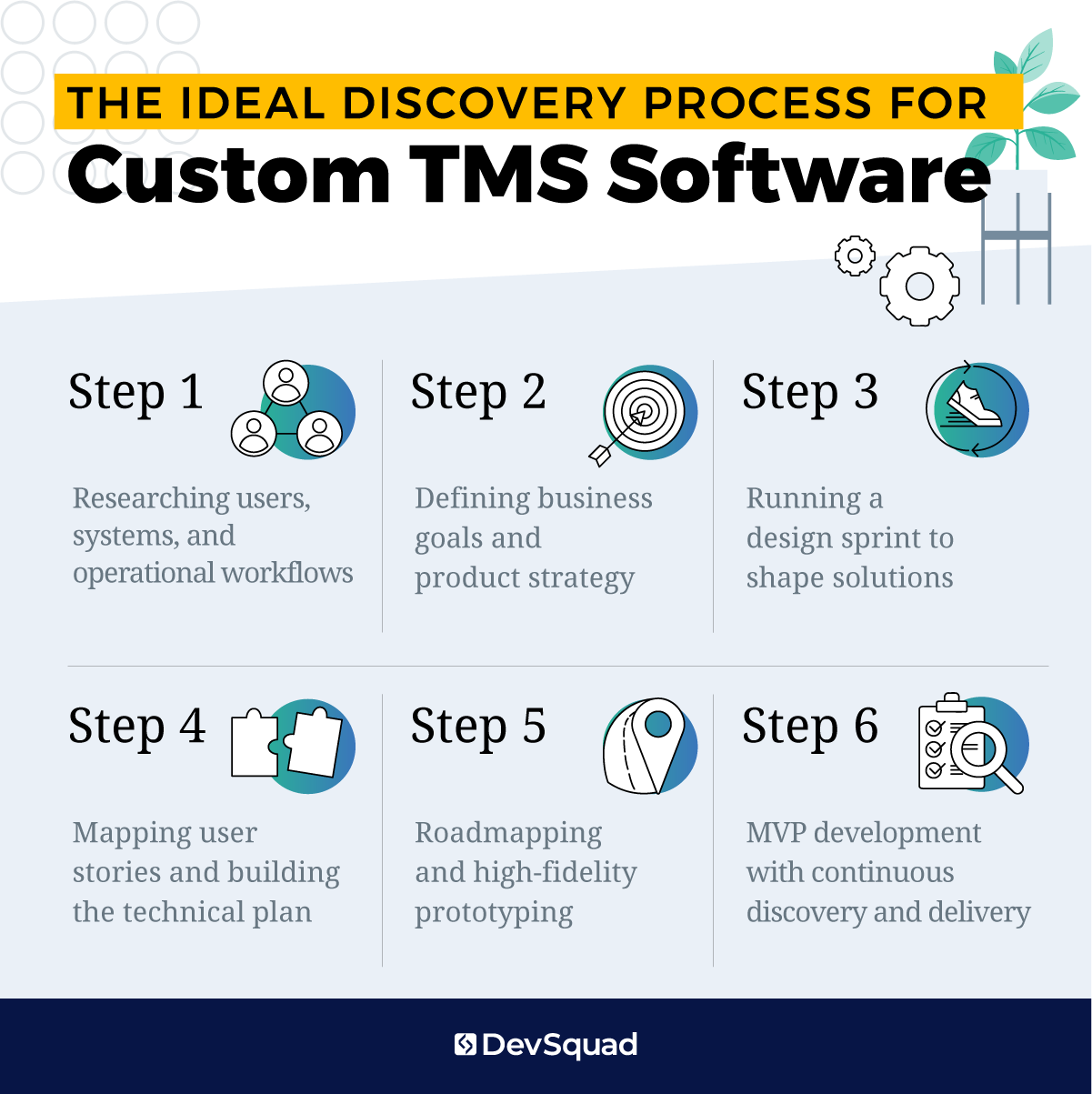
Step 1. Researching users, systems, and operational workflows
Discovery begins with understanding the reality of your transportation operation. This requires investigating how dispatchers, drivers, customers, and internal teams work today, not how they should work. Deep research prevents teams from redesigning outdated processes or replicating legacy inefficiencies.
Key research activities include:
User and stakeholder interviews
Workflow observation across dispatch, routing, billing, and fleet
Auditing current systems, data architecture, and integrations
Reviewing UX challenges and pain points
Identifying gaps in visibility, reporting, and operational consistency
This step grounds the entire project in real-world insight rather than assumptions.
Step 2. Defining business goals and product strategy
Next, your team aligns on the strategic purpose of the new TMS. Clear goals prevent scope creep and help prioritize features that actually impact the business.
Common strategic components include:
Operational efficiency goals
User experience improvements
Compliance or documentation requirements
Customer service and communication needs
Key metrics and outcomes the TMS must support
Discovery connects user needs with business objectives so the system can deliver lasting value.
Step 3. Running a design sprint to shape solutions
A design sprint accelerates alignment and reduces risk by validating ideas before development. Instead of debating features, teams rapidly explore solutions, prototype them, and test them with real users.
Typical design sprint outputs include:
Problem mapping
Solution sketching and ideation
A realistic, testable prototype
Feedback from target users
This step ensures your TMS direction is validated early, not after months of development.
Step 4. Mapping user stories and building the technical plan
Once the prototype direction is validated, the team translates insights into a clear development plan.
User stories define what each role needs from the system, for example:
“As a dispatcher, I need to assign loads quickly based on equipment rules.”
“As a driver, I need real-time updates without extra manual steps.”
“As a billing coordinator, I need automated rating logic for complex shipments.”
Technical planning includes decisions around:
Frameworks (more on this below)
Integration methods for ELDs, telematics, ERPs, and customer systems
Data architecture planning
CI/CD and DevOps tooling
This step sets the product up for scalability, maintainability, and the right development velocity.
Step 5. Roadmapping and high-fidelity prototyping
With user stories and technical direction defined, the team builds a clear roadmap that outlines what will be built now, next, and later. A roadmap is essential for focusing development efforts and sequencing features in a way that supports business value.
This step typically includes:
Prioritizing must-have vs. nice-to-have features
Sequencing capabilities into logical releases
Creating a high-fidelity prototype that mirrors the final UX
Testing the prototype with real users before development
Validating workflows for dispatch, routing, billing, fleet, and customer portals
Roadmapping clarifies the development path, while high-fidelity prototyping replaces guesswork with real user insight.
Step 6. MVP development with continuous discovery and delivery
The final stage of discovery transitions into development of the Minimum Viable Product—the smallest version of the TMS that delivers meaningful operational value. The MVP strategy is to get the software into real users’ hands quickly so feedback can guide future enhancements.
This phase typically includes:
Building the first functional release of the TMS
Testing with dispatchers, drivers, and operational teams
Gathering data and validating assumptions
Running continuous discovery to evaluate and prioritize future improvements
Implementing enhancements through ongoing agile sprints
This dual-track agile approach—continuous discovery paired with continuous delivery—ensures your custom TMS evolves as your business grows. Instead of becoming another static, outdated system, it continues to deliver ROI over the long term.
Common features to include in a transportation management software solution
While every logistics operation has its own workflows, there’s a core set of features that form the foundation of most custom TMS software. These capabilities support daily execution, improve visibility, reduce manual work, and create a scalable framework for long-term growth. When designed for your specific operation—not a generic industry model—these features deliver stronger adoption and far better ROI.
Load planning and management: Plan, assign, and track loads using workflows tailored to your lanes, freight types, and operational model.
Automated route optimization: Apply routing logic built for your service areas, time windows, and asset constraints to reduce miles and manual decision-making.
Real-time tracking and visibility: Deliver accurate logistics tracking with GPS updates, geofenced alerts, and exceptions that reflect your customers’ requirements.
Dispatch and driver coordination: Support dispatchers with tools that match your capacity rules, communication methods, and equipment needs.
Billing, rating, and invoicing automation: Automate rating, accessorials, multi-leg shipments, and customer-specific pricing to eliminate manual reconciliation.
Document management and compliance workflows: Store and manage bills of lading, PODs, permits, and compliance documents in one place.
Fleet and asset management: Track maintenance, inspections, and asset availability to reduce downtime and improve utilization.
Customer-facing portals and notifications: Give shippers branded access to tracking, documents, and real-time updates to reduce support volume.
Reporting and operational analytics: Surface KPIs for load performance, capacity, billing cycles, fleet readiness, and more—built around your operation, not generic templates.
Best frameworks for developing custom TMS software
The frameworks you choose for TMS software development determine how quickly your team can deliver features, how cleanly the system scales, and how easily it integrates with the rest of your transportation ecosystem. Modern frameworks empower teams to build reliable, flexible transportation platforms that continue to evolve as your operation grows.
1. Laravel (recommended for most custom TMS builds)
Laravel is a fast, maintainable backend framework with a strong ecosystem and clean architecture. It accelerates API development and supports complex workflows like dispatch, routing, and billing. Its developer-friendly structure helps prevent technical debt and keeps development velocity high, making it the top choice for most custom TMS platforms.
2. Vue.js for modern interfaces
Vue integrates seamlessly with Laravel and delivers a fast, responsive user experience for dispatchers, planners, and customers. Its component-based structure keeps frontends lightweight and easy to extend as your workflows evolve.
3. Node.js for real-time, event-driven workloads
When your operation requires rapid processing of high-volume data—such as telematics feeds, ELD pings, or continuous status updates—Node.js excels. Its event-driven architecture handles streaming data efficiently without slowing down core application processes.
4. Python for optimization and forecasting
Python’s scientific and data-focused libraries make it ideal for building routing engines, optimization logic, ETA modeling, and predictive planning tools. It often supports the main application by powering specialized calculation or forecasting services.
5. React Native or Flutter for driver mobile apps
Driver apps benefit from a single codebase that performs consistently across iOS and Android. React Native and Flutter help teams deliver features like POD capture, navigation, messaging, and equipment checklists quickly, and without maintaining two separate apps.
Top agencies to support your TMS software development
Choosing the right development partner is critical when building custom TMS software. Here are the top agencies to consider.
1. DevSquad
DevSquad specializes in building complex, process-heavy systems like transportation management platforms. Every engagement begins with a structured discovery phase, including user research, strategy alignment, and a high-fidelity prototype to validate workflows. Their dedicated product teams—strategists, product managers, designers, developers, QA, and DevOps—run dual-track agile to support both ongoing discovery and continuous delivery. DevSquad also prioritizes modern, developer-favorite frameworks and uses AI-driven tooling to accelerate development while keeping the product aligned with business goals.
2. Forbytes
Forbytes is a software development company that supports a mix of industries, including transportation. Their approach emphasizes process-oriented delivery, system architecture planning, and long-term maintenance. They offer services such as TMS integrations, modernization, and module development, supported by a team of senior-level developers.
3. Coax
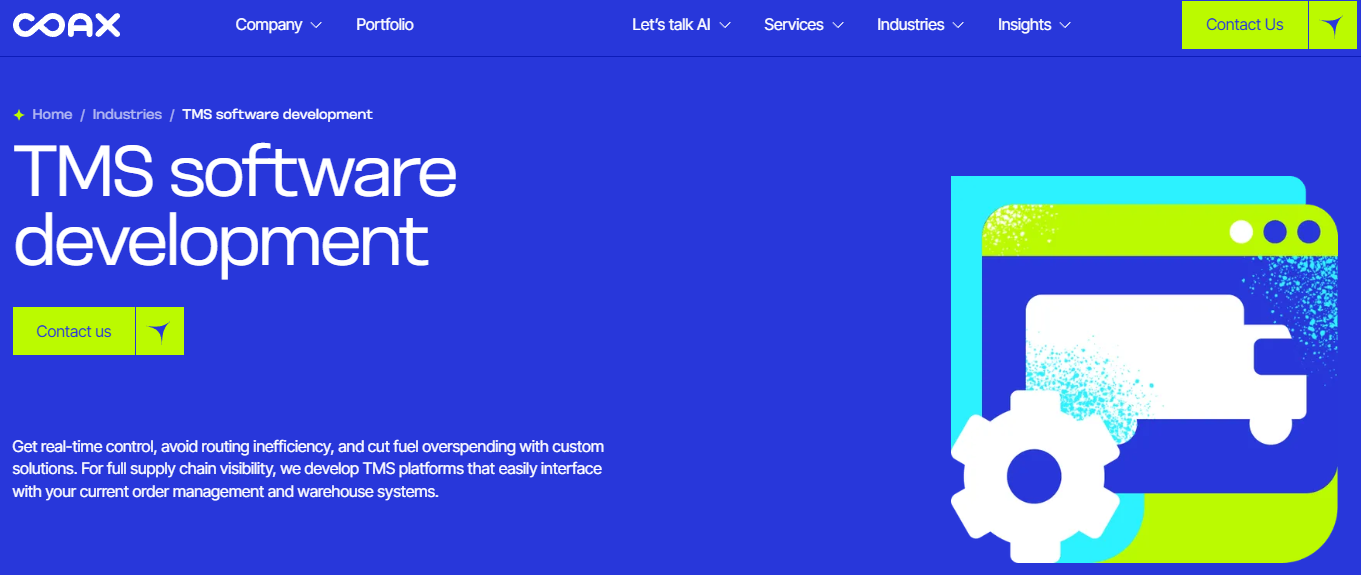
COAX offers transportation software development with a focus on replacing manual processes and connecting existing systems. Their services include custom TMS builds, integrations, UI/UX design, and modernization work. COAX emphasizes real-time tracking, routing improvements, and financial accuracy through integrations with ERP, WMS, carrier systems, and accounting tools.
4. Orases
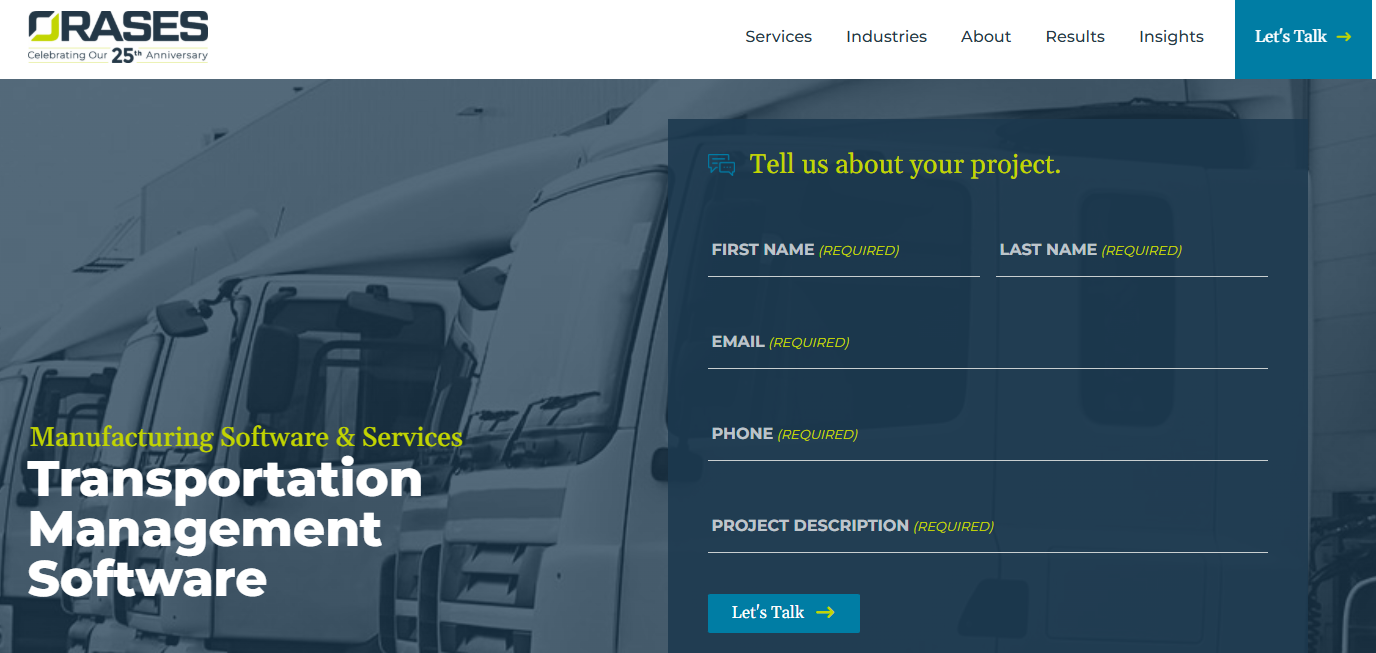
Being a custom software firm that works across many industries, TMS solutions are included in Orases’s portfolio. Their services span strategy, design, development, and modernization, with offerings such as transportation management software, supply chain tools, and data integrations. Orases emphasizes broad technical capability and long-term support, with an approach focused on improving operational visibility and automating manual tasks.
5. ScienceSoft
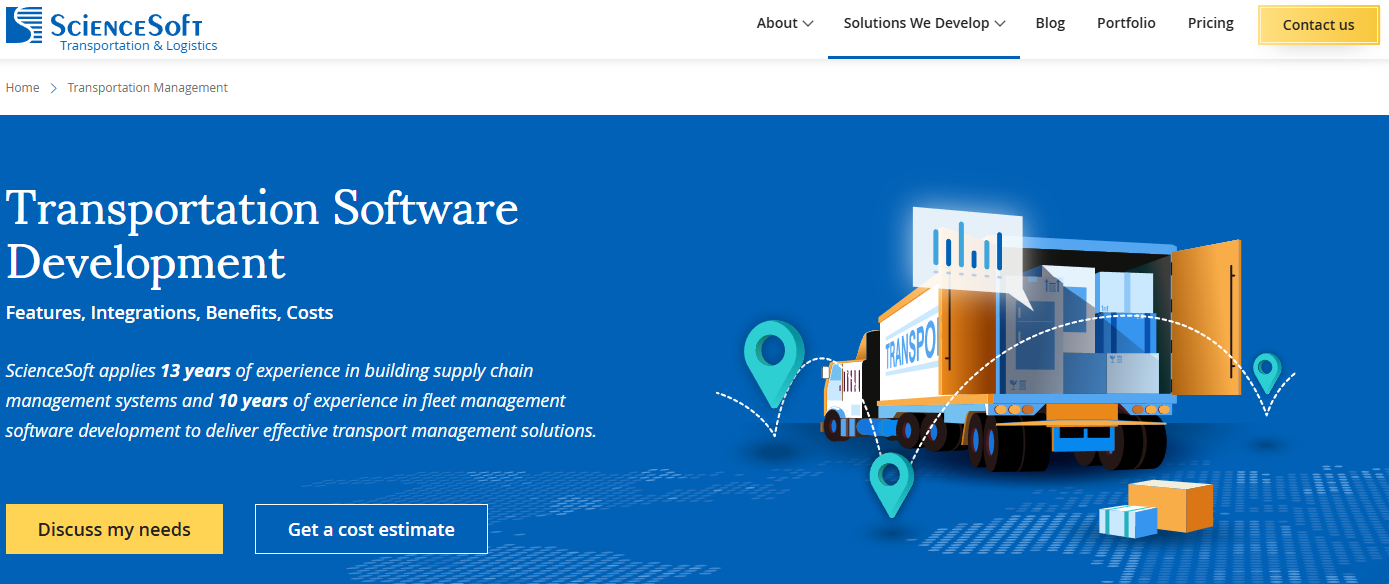
ScienceSoft is a global IT consulting and development company with experience in supply chain and fleet management software. Their transportation offerings include TMS planning, integrations, analytics, and custom module development. ScienceSoft highlights a wide range of features and technical capabilities, along with a structured implementation process. Their approach is comprehensive but leans toward large-scale enterprise solutions.
Ready for your own custom TMS software? Learn more about our custom software development services.

Dayana Mayfield is a SaaS copywriter and content marketer specializing in SaaS marketing, positioning, and go-to-market strategy. She has consulted for over 195 SaaS companies, focusing on both traffic and conversions. She has been featured in Entrepreneur, Forbes, and Business Insider. Outside of work, Dayana writes SciFi novels and spends her evenings surviving auditions, rehearsals, and tech week as a proud theater mom.