
The wrong internal tools are quietly costing businesses more than most leaders realize. When teams rely on spreadsheets, disconnected SaaS platforms, and manual workarounds, the damage compounds daily: hours lost to redundant data entry, decisions delayed by fragmented reporting, developers tied up maintaining systems that were never built for how the business actually works. The inefficiency rarely triggers a crisis. It just limits how fast a company can move and how much its people can actually get done.
At DevSquad, we've built more than 200 software products since 2014, a significant number of which are internal-use platforms for growing companies dealing with exactly these problems. What we've learned is that the tools that actually transform operations share a common thread: the team understood the business deeply before writing a single line of code. We hone in on the workflows, the informal workarounds, the exceptions that don't show up in any process document but that every employee navigates every day.
The companies who get the most from internal software treat it as a long-term asset, not a one-time IT project. Below are ten real-world examples (including several we built) that show what the right tool can do when operational complexity finally meets a solution designed around it.
What is internal use software?
Internal use software is any custom-built platform a company creates for its own operations, not to sell, license, or offer as a service, but to run the business better.
It's the underwriting engine that replaces a 15-minute manual review. The athlete management platform that connects 450 clubs through a single API. The onboarding tool that turns a spreadsheet-driven IT process into a push-button workflow.
What separates it from off-the-shelf software is the perfect, custom fit. Generic tools are built for the broadest possible customer. Internal software is built for one: you. That specificity is exactly what makes it valuable, and exactly why most companies don't build it until the cost of not building it becomes impossible to ignore.
Internal vs. external software
To clarify the distinction:
External software is typically built with a market in mind—it’s meant to be sold, licensed, or provided as a service to customers.
Internal software is for operational excellence. It’s not part of the business’s public offerings but is critical to its internal success.
A company might develop a platform to manage customer onboarding, automate procurement, monitor quality assurance, or integrate legacy data systems. These tools often go unseen by end customers but play a vital role in their experience.
Why it matters
Developing internal software can be a strategic move. Businesses that choose to build rather than buy usually do so because existing solutions:
Don’t integrate with existing systems
Aren’t flexible enough to accommodate unique processes
Are cost-prohibitive when scaled across teams or departments
Lack essential features needed for competitive differentiation
As businesses grow and evolve, so do their operational needs. Custom internal solutions give companies full control over functionality, performance, and scalability. Plus, when developed correctly, these tools can become a long-term asset that drives continuous improvement across the organization.
The benefits of developing internal-use software
Companies that invest in internal-use software are playing the long game. These aren’t flashy customer-facing platforms designed to win headlines—they’re strategic tools that transform how a business runs. The right internal software makes your teams more effective, your processes more consistent, and your operations more scalable.
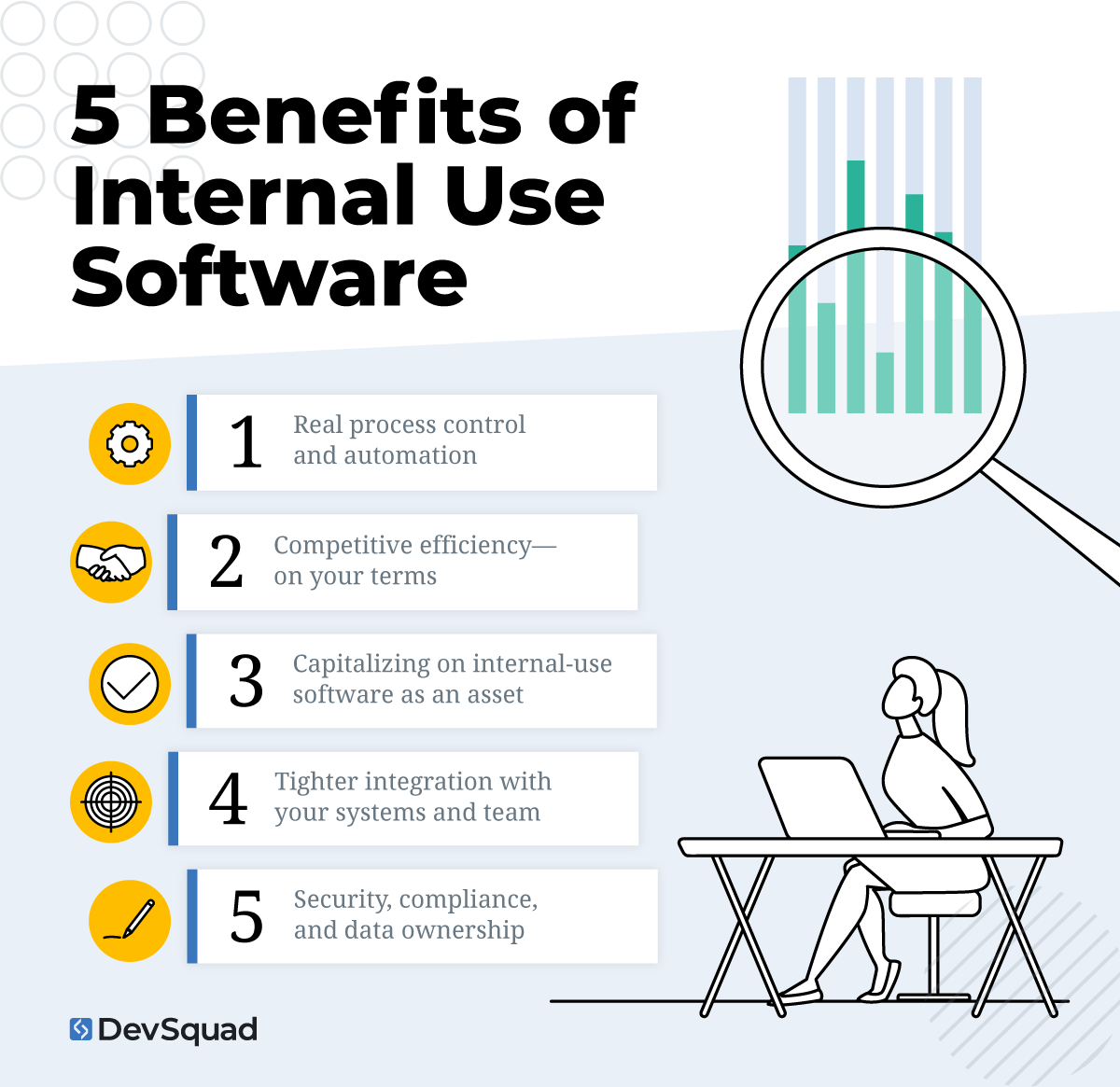
Here are the most important benefits of building internal-use software:
1. Real process control and automation
When you rely on commercial off-the-shelf (COTS) software, you often have to adapt your processes to the tool. But with custom internal-use software, the tool adapts to your process. That allows you to streamline how work gets done.
2. Competitive efficiency—on your terms
Internal-use software is your silent advantage. It's built for one audience: your team. That means every feature and decision can be hyper-focused on improving execution speed and data accuracy in the exact way your business needs..
3. Capitalizing on internal-use software as an asset
One benefit that’s often overlooked is how internal-use software can be capitalized. Under GAAP standards (specifically ASC 350-40), many costs related to developing internal-use software can be recorded as an intangible asset on your balance sheet and amortized over time. This is a major factor in accounting for internal use software.
Capitalization starts once you’ve moved beyond the planning phase and committed to building the software. Not all costs qualify so make sure you or your accounting team understands what can be capitalized under these standards.
4. Tighter integration with your systems and team
Every company’s tech stack is different and the internal-use software scope will reflect that. It gives you the ability to integrate deeply with your other tools—whether that’s a legacy ERP, your CRM, or a specialized analytics platform. You’re not confined by the limitations of an API or the pace of a vendor’s product roadmap.
You can also align your internal software with the specific roles, responsibilities, and reporting structures of your team. That means fewer workarounds, better data accuracy, and faster decision-making.
5. Security, compliance, and data ownership
When your internal-use software is built in-house or by a trusted partner, you’re not handing over sensitive operational data to a third party. You control where data is stored, how access is managed, and how often updates are applied. That level of control is especially important for industries that face heavy compliance burdens—like healthcare, finance, and logistics.
You’re also in full control when it comes to security protocols, auditing processes, and encryption standards. For some organizations, that’s non-negotiable.
10 internal use software examples that led to company success
Now that you have a clearer understanding of what internal-use software is and the key benefits of developing it, let’s switch our focus to some examples.
1. US Ski & Snowboard Team – athletic program operations and ecommerce integration
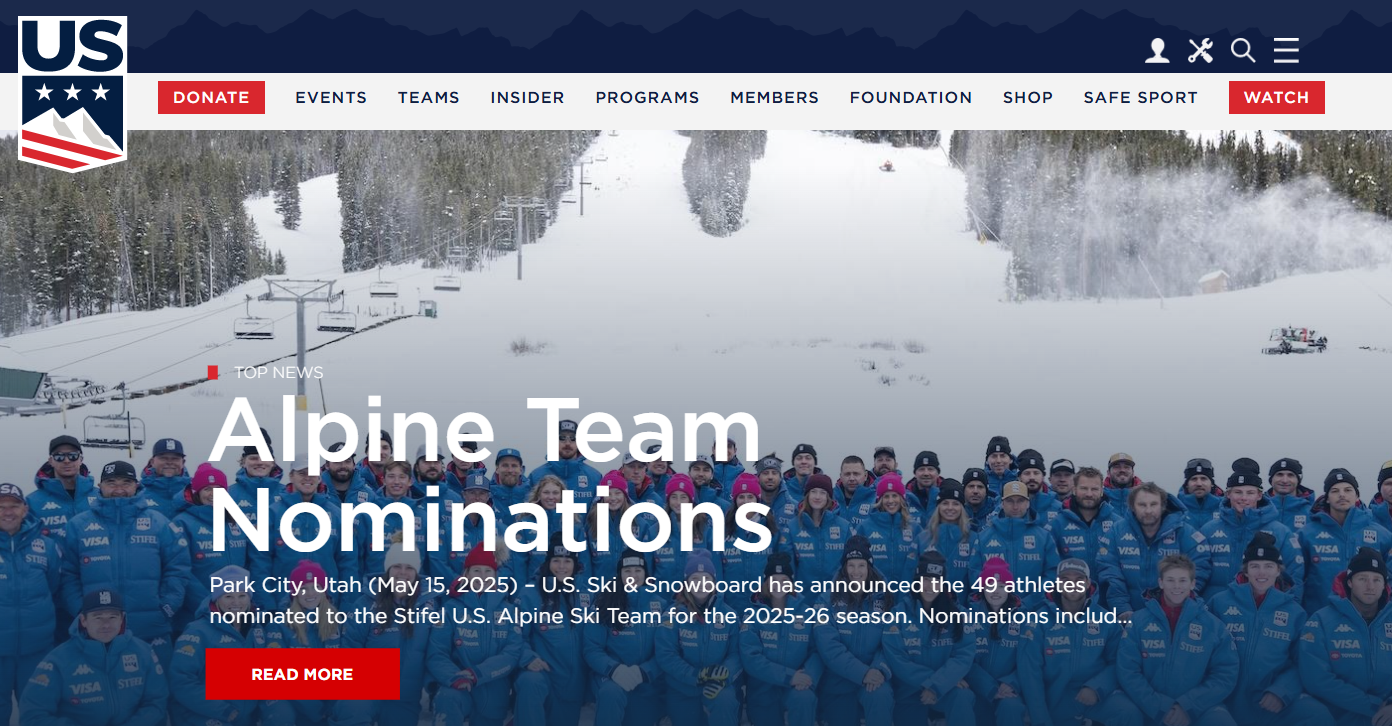
The US Ski & Snowboard Team supports over 30,000 student-athletes and more than 450 clubs across the country, in addition to managing Olympic athletes. But behind the scenes, their internal systems were fragmented, creating inefficiencies for staff and a frustrating experience for athletes. They also wanted to launch a public-facing ecommerce store—but needed it to integrate seamlessly with their internal tools.
Problem: Outdated software, siloed data systems, manual data entry, and a lack of cohesive digital infrastructure.
Solution: DevSquad rebuilt their athlete management platform from the ground up, developed a custom API to unify internal operations, and launched a fully integrated ecommerce site that aligns with the organization’s brand and infrastructure.
Successes achieved:
Centralized athlete data and management across all clubs and programs
Automated internal workflows, eliminating manual copy-paste tasks
Integrated ecommerce store tied directly to membership systems
Improved user experience for both staff and athletes
New revenue stream through online merchandise sales
"What made it exciting was that we were able to build a product that solved a real user need and meaningfully improved the overall experience. Before, it was difficult for users to navigate the platform, make purchases, and connect with the right opportunities. Through the custom software we built, we made that process much easier and more intuitive." — Mauricio Kiyama, VP of Product, DevSquad
2. Telescope Health – virtual care operations and platform consolidation
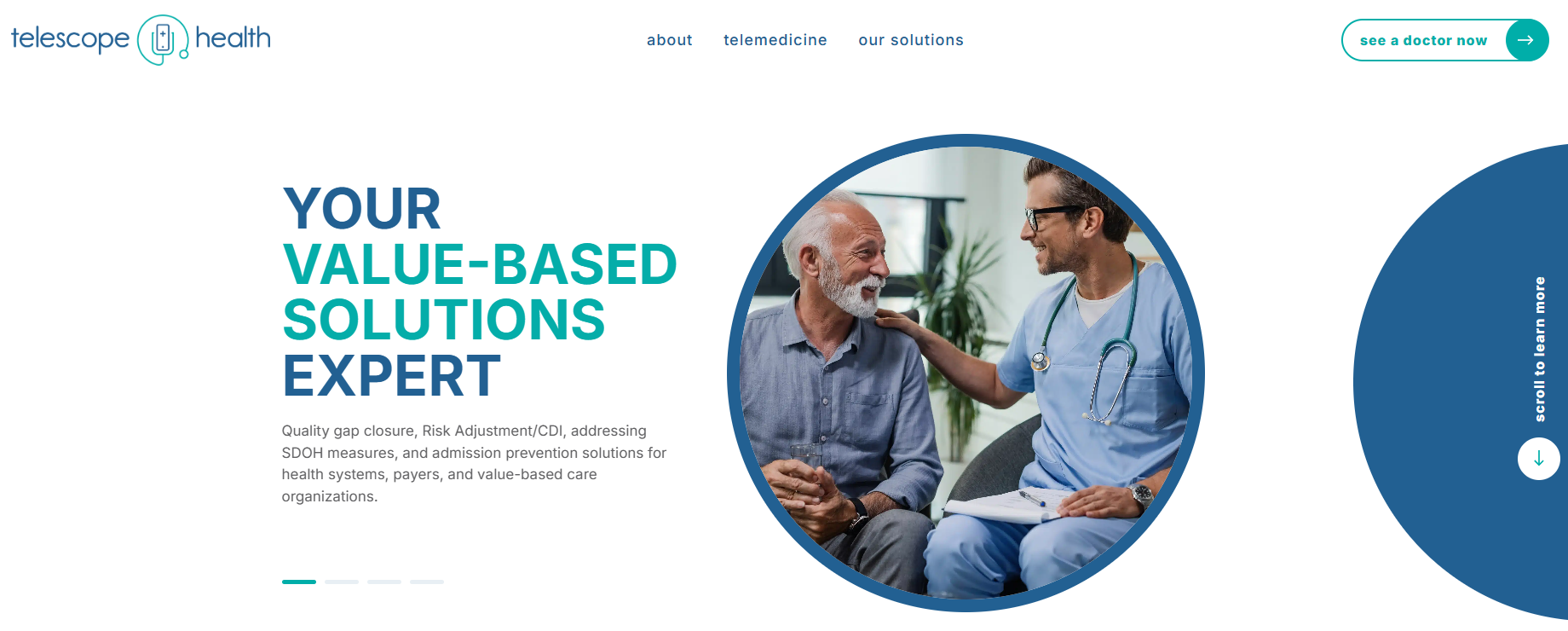
As the demand for virtual care skyrocketed during the COVID-19 pandemic, Telescope Health faced the limitations of a fragmented, vendor-driven tech stack. With multiple delivery systems, duplicative data entry, and consumer-facing platforms being used for internal workflows, the company needed a purpose-built solution that could centralize operations and enable scalable, secure, and compliant telemedicine services.
Problem: Disconnected systems were slowing down care delivery, increasing risk of error, and preventing data-driven decision-making. The lack of interoperability and role-based access controls added friction to internal workflows and regulatory oversight.
Solution: Telescope Health partnered with SourceFuse to develop a fully integrated, HIPAA-compliant internal-use SaaS platform. Built on AWS cloud-native services, the platform streamlined patient management, enabled multi-tenant provisioning, and introduced secure, role-based access across every level of the organization.
Successes achieved:
Centralized patient data into a single source of truth accessible across all services
Reduced manual data entry and transcription errors, improving productivity
Enabled seamless role-based access and HIPAA-compliant audit trails
Improved provider efficiency and quality of care delivery across multiple service lines
Future-proofed platform architecture with scalable tenant onboarding and secure data structures
3. Box – employee productivity and IT automation

With a growing workforce of over 1,500 employees and a global presence, Box needed internal software that could keep pace. Manual workflows for onboarding, offboarding, and security processes were becoming a bottleneck—resulting in inefficiencies for HR, IT, and the security team. Box wanted a solution that would automate these repeatable processes and allow teams to focus on higher-value work.
Problem: Manual spreadsheet-based workflows for employee lifecycle events, slow IT turnaround for security protocols, and no internal capacity to develop fast, flexible solutions.
Solution: DevSquad partnered with Box to design and build internal-use software that automated core employee processes. With Laravel expertise and dedicated product management, DevSquad created custom tools that integrated directly with Box’s ticketing system. These solutions enabled support staff to manage onboarding and offboarding via push-button workflows and empowered the security team to independently handle untrusted device scenarios.
Successes achieved:
Reduced manual effort in employee onboarding/offboarding through ticket-based automation
Eliminated late-night emergency escalations by giving the security team autonomous controls
Shifted repetitive work away from IT to support teams, freeing up valuable technical resources
Delivered custom tools that integrate seamlessly into Box’s existing tech ecosystem
Achieved immediate ROI by decreasing friction and turnaround time for critical workflows
"Custom software is built to meet the specific needs of a particular client — development is driven by direct client requests and unique business processes. I always focus first on understanding those processes before proposing a technical solution. That ensures the software not only works technically but actually improves efficiency for the people who use it every day." — Renato Motikawa, Technical Product Manager, DevSquad
4. Tutti Gourmet – ERP functionality through no-code innovation

Like many growing manufacturers, Tutti Gourmet struggled with manual, error-prone workflows in inventory management, traceability, and operational reporting. With no off-the-shelf solution that fit their needs—and no budget or resources for custom-coded enterprise software—they turned to no-code platforms. Operations Director Elijah Magrane led the transformation by building custom internal-use apps using AppSheet.
Problem: High error rates and inefficiencies from manual Excel-based workflows for inventory, traceability, and employee time tracking. Off-the-shelf ERP systems were either too expensive or too rigid to adapt to their niche needs.
Solution: Using AppSheet, a no-code development platform, Magrane created over 40 internal apps to digitize everything from warehouse inventory and supplier lists to quality checklists and distribution tracking. He even added barcode and QR code capabilities for real-time inventory management, enabling the company to fully digitize its traceability workflows.
Successes achieved:
Cut traceability workflow time by more than 50%, with near-zero error rates
Developed over 40 internal-use apps to streamline production and logistics
Automated restock alerts, time tracking, inspections, and inventory audits
Built a fully functioning cloud-based ERP system tailored to their operations
Enabled remote access to operational data for leadership and sales teams
5. ADP – internal MVP for employee offboarding and career transition
When ADP Ventures set out to build Nexpert—a new internal-use platform to support offboarded employees in their career transition—they needed more than a conventional enterprise development team. They partnered with DevSquad to apply startup-style speed and strategy to quickly validate an MVP that met ADP’s high standards and integrated with third-party tools for career planning.
Problem: ADP needed to rapidly develop and launch a new platform for employees leaving the company. They required a lean, iterative process to build and test core features, but didn’t have the in-house bandwidth or MVP-specific expertise to move fast enough.
Solution: DevSquad facilitated a design sprint to define key features, including AI-driven job matching and resume assessments. From there, the team launched into two-week development cycles using Laravel, allowing ADP UX researchers to gather live user feedback in real time. DevSquad handled all aspects of development while planning for a smooth post-launch handover.
Successes achieved:
Designed and launched a full-featured MVP in under 6 months
Integrated AI tools for career guidance and resume optimization
Delivered startup-speed iteration while aligning with enterprise-grade security and quality
Onboarded ADP’s internal developers in just two weeks with full Laravel training
Gave ADP Ventures a scalable platform (Nexpert) to support offboarded employees with job search tools, learning resources, and career assessments
"The real function is to act as a strategic consultant — understanding the client's real challenges, asking the right questions, and working together to find solutions that create value for both the business and its users. The goal is to deliver quality and create value early, then keep improving based on what users actually need, not what we think is perfect." — Matheus Fonseca, Associate Product Manager, DevSquad
6. Tata Consultancy Services – enterprise-wide self-service analytics
 As one of the world’s largest IT services providers, Tata Consultancy Services generates massive volumes of operational data—but turning that data into insights was a challenge. With siloed systems, high turnaround times for reporting, and limited access to analytics for business users, TCS needed a powerful internal-use solution to unlock the value of their data at scale.
Problem: Slow, fragmented reporting workflows led to delayed insights, high reliance on IT for analytics, and limited ability for business users to act on data. Traditional information architecture and legacy systems prevented a shift toward truly data-driven decision-making.
Solution: TCS built an in-house self-service analytics platform to consolidate data, standardize reporting, and make insights accessible across departments. The solution featured drag-and-drop dashboards, natural language querying, built-in data governance, and machine learning-enhanced insights. A new central data fabric enabled near real-time access to validated, secure information for 70 departments and 20,000 users globally.
Successes achieved:
Deployed over 700 dashboards across 70 departments, enabling real-time analytics for 20,000+ users
Reduced analytics turnaround times by 50% and cut data storage requirements by 90%
Achieved an 85% reduction in project delivery risks through proactive tracking
Enabled AI-powered conversational analytics and automated reporting
Consolidated and retired legacy platforms, reducing enterprise technical debt
7. HiBeam – custom CRM for automotive shop marketing
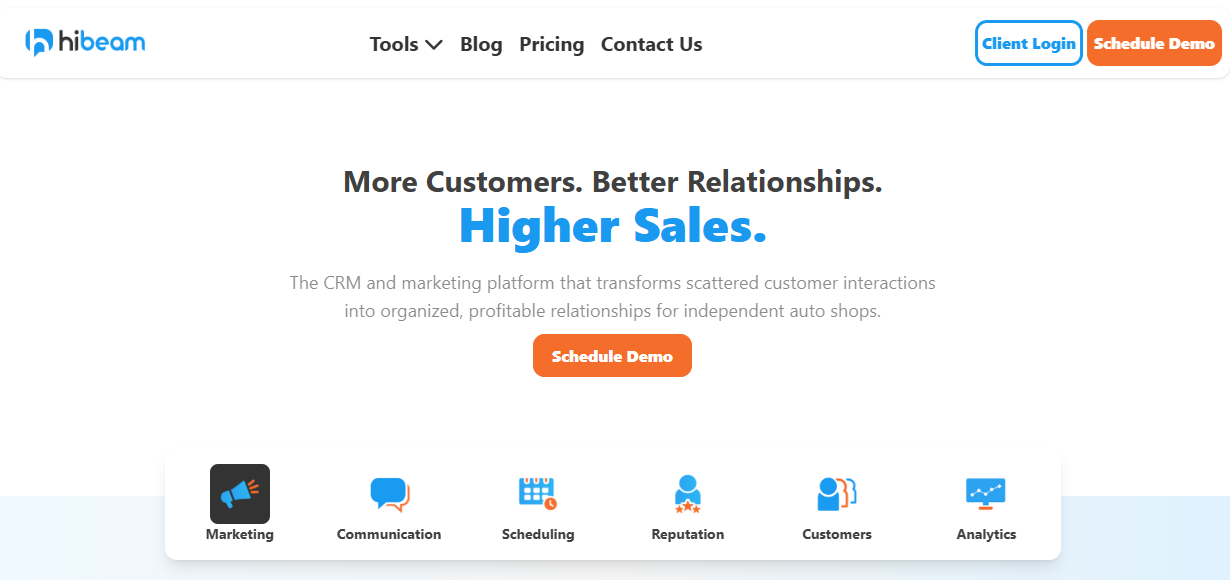 HiBeam is a digital marketing agency built exclusively for the automotive repair industry. Founded by a former shop owner, HiBeam helps independent repair shops attract and retain customers through smarter, more targeted marketing. But as their client base grew, the limitations of off-the-shelf CRM tools were undermining their results and their reputation.
Problem: Every available CRM treated automotive customers the same way. Sending different messages to different customer segments meant building entirely separate campaigns for each one, multiplying complexity across reactivation campaigns, declined service reminders, and maintenance triggers. Visibility into what was actually working was limited, and no existing platform was built around how automotive marketing actually operates.
Solution: HiBeam partnered with DevSquad to design and build a proprietary CRM from the ground up, one built entirely around their methodology and the unique segmentation logic the automotive industry requires. Over 12 months, DevSquad mapped, designed, and developed the platform, with a dedicated project manager who became a long-term collaborator deeply familiar with the industry's workflows and client needs.
Successes achieved:
Built a fully custom CRM purpose-designed for automotive marketing workflows
Replaced multi-campaign workarounds with flexible, behavior-driven segmentation in a single platform
Enabled HiBeam to serve larger, multi-location shops with full-service marketing
Launched a self-serve version of the platform for smaller shops managing their own marketing
Created a new recurring revenue stream through the self-serve product tier
Gave a non-technical founder a scalable technical asset without requiring him to manage development directly
"Customization requires deep knowledge of the company itself, not just the market segment. Understanding how a business operates, its challenges, and the unique approach they take is the most important part. My approach is developing a close relationship with the client and key people — that's how you get the information you actually need." — Nelson Pereira, Technical Product Manager, DevSquad
8. Fundwise – automated underwriting for small business loans
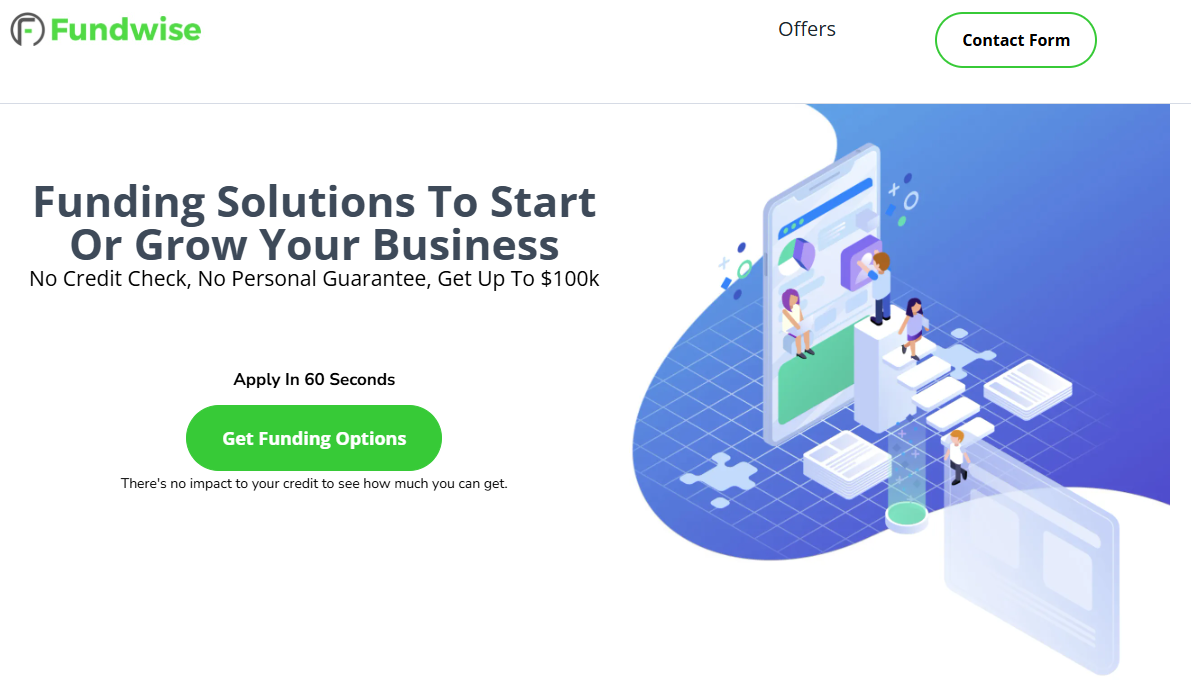
Fundwise Capital, a leader in small business funding, needed a faster, more scalable way to underwrite and approve loans. Their manual process—reviewing individual credit reports line by line—took up to 15 minutes per file and slowed down both internal operations and partner communications. Previous attempts to build a solution, whether with in-house hires or offshore firms, fell short of expectations.
Problem: Manual underwriting was inefficient, partner communications were delayed, and outsourced dev teams couldn’t deliver a high-quality, fast-moving solution.
Solution: Fundwise partnered with DevSquad to build a fully customized underwriting engine that intelligently extracts relevant data from credit reports using rule-based logic and automation. The team also created a real-time dashboard that allows Fundwise to instantly update affiliates on the status of submitted leads, and began work on a credit monitoring tool for Fundwise customers.
Successes achieved:
Increased underwriting efficiency by over 400%
Delivered an initial working version of the underwriting tool in just two weeks
Provided real-time reporting tools for affiliate and partner engagement
Reduced manual review work and eliminated data processing delays
Set the foundation for a fully integrated internal platform to support long-term growth
"Learning the specific rules and guidelines of a business that has been running for a long time is the hardest part — not coding it. That's directly where the software's success lies. In the long run, reimagining and reorganizing how things work always pays off, whether through more productivity or saved hours of work." — Ed Cavalcante, Technical Product Manager, DevSquad
9. MITRE – secure, AI-native productivity platform
MITRE, a nonprofit R&D organization serving key U.S. government agencies, faced the growing challenge of extracting timely insights from massive volumes of internal data. With traditional analytics approaches proving too slow and siloed, MITRE saw an opportunity to leap ahead by developing its own generative AI platform—MITREChatGPT—securely tailored for internal use and fully aligned with its high-security environment.
Problem: MITRE’s legacy architecture made it difficult for employees to retrieve and synthesize insights across vast datasets. Reporting cycles were slow, manual, and dependent on IT teams. The organization needed a secure, scalable AI solution to empower non-technical employees and accelerate its decision-making processes.
Solution: MITRE built MITREChatGPT—its own secure, in-house version of ChatGPT, integrated into its enterprise data fabric and knowledge repositories. Built using OpenAI models deployed in a secure Microsoft Azure tenant, the platform enables researchers and staff to query documents, summarize policy materials, generate code, and complete reports faster. The system features role-based access, retrieval-augmented generation (RAG), and natural language search—allowing 60% of MITRE’s 10,000-person workforce to use the tool in production.
Successes achieved:
Reduced report generation and document analysis time by 10–30%
Enabled 700+ dashboards and analytics tools across 70 departments
Empowered 60% of the workforce to use MITREChatGPT for everyday work
Accelerated delivery of policy and research recommendations to federal agencies
Built a secure AI platform aligned with “Secure by Design” principles and classified data protection
10. Pfizer – manufacturing operations and supply chain intelligence
When the COVID-19 pandemic disrupted global operations, Pfizer accelerated its digital transformation to ensure production continuity and optimize its pharmaceutical supply chain. Central to this effort was the launch of the Pfizer Global Supply – Digital Operations Center (DOC), a proprietary internal-use platform designed to give manufacturing teams a real-time, unified view of operational performance across sites worldwide.
Problem: Disparate systems, fragmented visibility, and manual coordination created bottlenecks in manufacturing and supply chain operations. The urgency of the pandemic revealed the need for a centralized, intuitive platform to enable leaner operations and better decision-making.
Solution: Pfizer developed DOC as a patent-pending, cloud-based solution that aggregates performance data, monitors production variability, and integrates with its existing lean manufacturing system (IMEx). With AI-powered insights, drag-and-drop visualizations, and user-specific journey maps, DOC empowers staff—from floor workers to executives—to anticipate issues and take corrective action in real time. Agile development and cloud-native architecture allowed Pfizer to scale DOC to hundreds of sites in a matter of weeks instead of years.
Successes achieved:
Reduced manufacturing cycle times by up to 10% in key areas
Accelerated platform deployment from 2 years to a few weeks
Enabled remote site management and essential worker safety during COVID-19
Improved collaboration between digital and manufacturing teams with user-centered design
Enhanced prioritization of improvement projects based on real-time data analysis
Build vs. buy: how to know when custom software is the right call
Most companies don't arrive at the decision to build internal software through a strategic process. They arrive through pain. A workflow that breaks one time too many, a SaaS vendor that raises prices without adding value, a team quietly building shadow systems in spreadsheets because the official tools don't work for them.
A few indicators that tilt the answer toward building: your workflows are genuinely unique and off-the-shelf platforms require constant workarounds; you're paying for overlapping SaaS subscriptions that still don't fully connect; your competitive advantage lives inside a process no generic tool can replicate; or your team is spending meaningful hours every week on manual work a custom tool could eliminate.
The case for staying with SaaS is equally clear when your needs are standard, and the operational cost of owning custom software would outweigh the gains. Building is always an investment, not just in development, but in ongoing maintenance and ownership.
What DevSquad sees most companies get wrong is framing the decision as a simple cost comparison. The real question isn't whether custom software costs more to build than a SaaS subscription. It's what the current system is actually costing the business in lost productivity, data errors, and the strategic work nobody is doing because they're too busy working around broken tools.
"Replacing a SaaS stack with an internal solution means managing feature gaps, team resistance, and hidden upkeep costs. Prioritize a basic version first, and consider running both systems simultaneously at launch to protect your data and avoid breaking the daily workflows your team depends on."
— Rafael Lunardelli, CTO at DevSquad
Thinking about developing your own internal-use software?
If your team is struggling with inefficient workflows, disconnected systems, or manual processes, it's time to consider building internal-use software. But jumping into development without validation leads to wasted time and budget.
Before writing a single line of code, your first move should be clarity. What problem are you solving? Who are the users? What impact will the tool have? You don’t need all the answers—you need the right process to find them.
At DevSquad, we guide companies through this process with our Design Sprint. In just one day, we help you define the problem, prototype a solution, and gather early feedback. From there, we build your version one with startup-level speed and precision, then transition ownership to your internal team if that’s the plan.
Ready to improve your internal operations? Learn more about our internal-use software development services.

Dayana Mayfield is a SaaS copywriter and content marketer specializing in SaaS marketing, positioning, and go-to-market strategy. She has consulted for over 195 SaaS companies, focusing on both traffic and conversions. She has been featured in Entrepreneur, Forbes, and Business Insider. Outside of work, Dayana writes SciFi novels and spends her evenings surviving auditions, rehearsals, and tech week as a proud theater mom.