
Building a virtual care platform that actually works—for patients, providers, and your organization—is no easy feat. Custom telehealth software solutions give you control over workflows, compliance, and user experience, but they also come with technical and strategic challenges. Still, there has never been a better time to gear up and tackle them.
In this guide, we break down what custom development really means in the healthcare space: how the process works, what features matter most, and which frameworks and agencies are best equipped to deliver.
What are custom telehealth software solutions?
Custom telehealth software solutions are tailored platforms that enable healthcare providers to deliver medical services remotely. These platforms support virtual care by combining clinical workflows, communication tools, and data management systems into a single, secure environment designed for a specific organization’s needs.
Unlike off-the-shelf tools, custom telehealth solutions are built with your processes, patients, and compliance requirements in mind. They allow you to optimize usability, scale more easily, and integrate with your existing systems like electronic health records (EHRs), billing platforms, or patient portals.
Custom telemedicine software development used to be cost prohibitive to all but the biggest organizations, but that has changed. With AI-assisted development, building custom solutions is faster and more affordable than ever. Smart code generation, automated testing, and predictive analytics tools reduce development timelines and ongoing maintenance costs. This means providers can invest in better technology without blowing up their budgets.
Ultimately, custom telehealth software development is about delivering better virtual care. It gives healthcare organizations the tools they need to offer seamless, high-quality experiences to patients.
Key considerations for telemedicine software development
Building a custom telehealth solution involves more than just enabling virtual visits. It requires thoughtful planning across multiple dimensions, from security and compliance to integrations, user experience, and scalability. Here are the most important factors to keep in mind when planning your telemedicine software development project:
1. Regulatory compliance and data security
Healthcare is one of the most heavily regulated industries, and virtual care platforms must meet strict standards to protect patient data and maintain compliance.
HIPAA compliance is non-negotiable in the U.S. Every data flow—whether it’s video, messaging, or document sharing—must follow HIPAA guidelines.
End-to-end encryption is essential to secure data both at rest and in transit, especially for video calls and chat communications.
Role-based access controls help limit data access to only the users who need it, such as physicians, administrative staff, or billing personnel.
Audit logging is critical for tracking user activity, which is often required in regulatory audits and internal reviews.
If your solution serves patients in other countries or regions, additional compliance standards like GDPR (EU), PIPEDA (Canada), or state-specific laws may also apply.
2. Integration with existing systems
Custom telehealth platforms should integrate smoothly with the systems you already use, eliminating duplicate work and enabling more efficient operations.
EHR and electronic medical record (EMR) integration lets providers access and update patient records in real-time during virtual visits.
Billing and insurance systems need to connect with the platform to verify coverage and automate claims.
Scheduling tools should sync with provider calendars to allow patients to book and manage appointments easily.
Single sign-on (SSO) can reduce login friction for internal users and simplify user management.
Standardized APIs, such as Fast Healthcare Interoperability Resources (FHIR), improve compatibility across platforms and allow for future-proofing as systems evolve.
3. User experience for patients and providers
A smooth, intuitive experience is essential. Not just for adoption, but for delivering quality care and encouraging ongoing use of the platform.
Ease of use should be baked into the design for both patients and clinicians. The interface should feel simple and familiar, even to users with low technical literacy.
Mobile-first design is critical, especially for patients who prefer or rely on smartphones for care access.
Accessibility features (such as screen reader compatibility and color contrast) should meet ADA compliance and serve users of all abilities.
Onboarding flows for both patient and provider users reduce support burden and help users feel confident from the start.
In-app support, like help buttons, chat assistance, or guided tutorials, makes the experience more self-sufficient and lowers drop-off.
4. Scalability and development approach
Planning for long-term success requires more than just coding the MVP. You need a strategy that supports growth, flexibility, and ongoing improvement.
Modern frameworks like Laravel (for backend) and Vue.js (for frontend) support rapid iteration and long-term maintainability.
Cloud-native architecture—whether containerized or serverless—makes it easy to scale infrastructure as demand grows.
Modular development helps your team roll out updates or add features without reworking core systems.
AI-assisted development can accelerate timelines, automate testing, and reduce manual errors—helping you launch faster with fewer resources.
Agile methodology allows for continuous discovery and iteration, helping you respond to user feedback and changing requirements without slowing down development.
7 common use cases for telehealth software
Custom telehealth solutions development unlock new opportunities for care delivery across many specialties and patient populations. Here are seven of the most valuable and widely adopted use cases to consider during development.
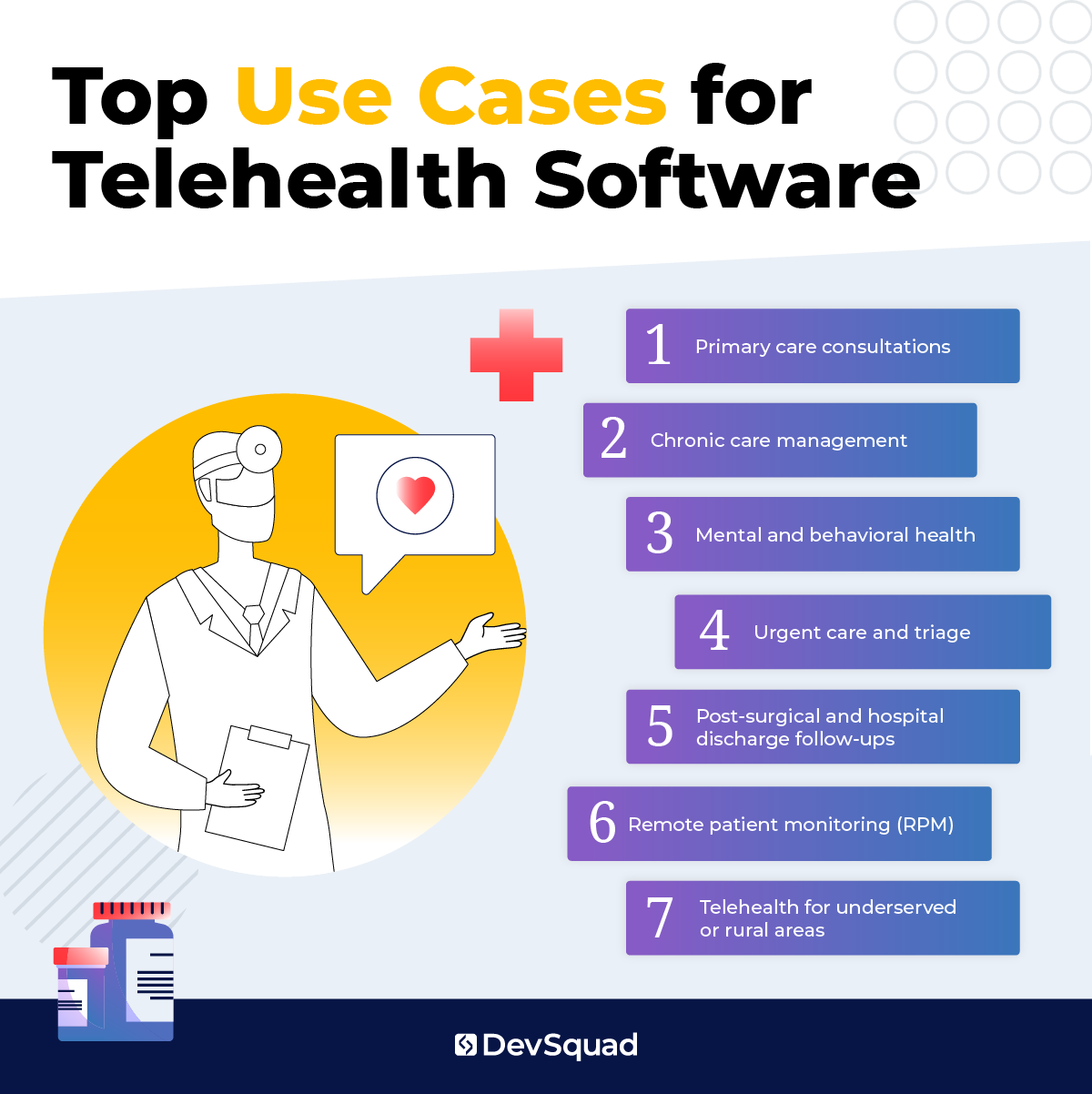
1. Primary care consultations
Telehealth is becoming a standard offering for primary care practices. Virtual consultations allow patients to connect with their physicians for non-emergency visits such as general check-ups, medication refills, and chronic condition monitoring. Custom platforms can include features like:
Integrated patient histories
Secure messaging
Streamlined note-taking
2. Chronic care management
For patients with long-term conditions like diabetes, heart disease, or asthma, consistent monitoring and follow-up are critical. Telehealth makes it easier to maintain continuity of care, while custom software allows providers to implement condition-specific workflows. This can include:
Symptom tracking
Medication reminders
Alerts triggered by patient-reported data or
Alerts from wearable device integrations.
3. Mental and behavioral health
Telehealth has transformed access to therapy, counseling, and psychiatric care. Custom telemedicine platforms can be built to support:
One-on-one video therapy sessions
Group therapy rooms
Secure asynchronous messaging
E-prescribing for behavioral medications
Private practices and larger organizations alike benefit from platforms that offer a calming, confidential user experience tailored to mental health care.
4. Urgent care and triage
Virtual urgent care allows patients to get fast assessments for non-life-threatening conditions. A custom triage system can guide patients through symptom checkers and decision trees, helping them determine whether they need a virtual visit, in-person appointment, or self-care. These systems reduce ER wait times and support more efficient care routing.
5. Post-surgical and hospital discharge follow-ups
Follow-up care is essential to prevent complications and reduce readmission rates. Telehealth software enables providers to check in with patients remotely, review incision sites via video, and collect recovery data through guided questionnaires. Custom features like alerts for missed follow-ups or risk-based escalation protocols make this use case a powerful tool for surgical teams and care coordinators.
6. Remote patient monitoring (RPM)
RPM extends telehealth by incorporating data from connected devices like blood pressure cuffs, glucose monitors, and pulse oximeters. A custom platform can collect, store, and analyze this data in real-time, triggering alerts or messages to care teams when readings fall outside safe ranges. These tools are especially valuable for managing high-risk patients and detecting issues before they escalate.
7. Telehealth for underserved or rural areas
In communities where local access to care is limited, telehealth can serve as a primary point of care. Custom solutions can be optimized for low-bandwidth environments, offer language localization, and support hybrid models where virtual care is coordinated with mobile clinics or community health workers. This use case highlights the role of telehealth in expanding equity and access.
The discovery process for custom telehealth solutions development
AI-assisted development has lowered the barrier to building custom software. Teams can now move faster, automate key parts of development, and build high-quality applications with fewer resources. But that alone doesn’t create a usable solution. Discovery is what transforms an idea into a fully aligned product—one that solves the right problems, fits existing workflows, and delivers lasting value.
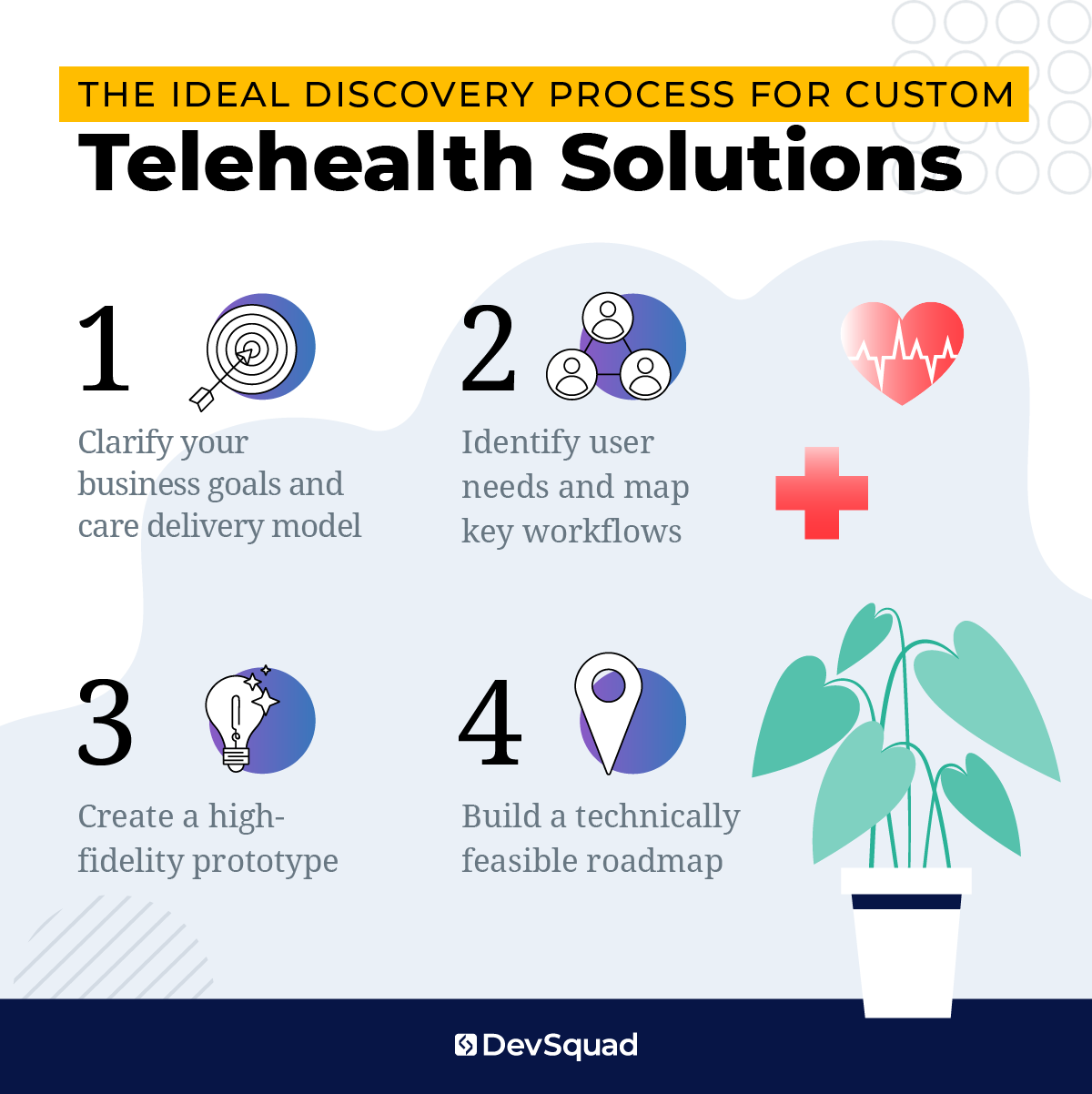
Here’s what the discovery process looks like for custom telehealth solutions:
1. Clarify your business goals and care delivery model
Before any features are defined, work with stakeholders to understand the broader goals of the organization and how care is currently delivered.
What clinical services will be delivered virtually?
How will providers and patients interact?
What are the compliance and operational risks if workflows are misaligned?
This alignment shapes the foundation of the product roadmap. It also prevents feature bloat and wasted development effort later in the process.
2. Identify user needs and map key workflows
A telehealth platform must serve multiple user groups: patients, providers, care coordinators, and possibly administrators. During discovery, map the most important user journeys and surface friction points or inefficiencies in current processes.
How are appointments currently scheduled, delivered, and documented?
What devices do patients use to access care?
Where do care teams need more automation or visibility?
This research informs UX design and makes the final product far more intuitive and efficient.
3. Create a high-fidelity prototype
Once the key workflows are mapped, create a clickable, high-fidelity prototype that represents the core functionality of the future product. This prototype is used to validate the concept with real users and stakeholders before development begins.
Patients can walk through appointment booking or communication flows
Providers can review how documentation or note-taking will function
Compliance and operations teams can evaluate how the platform supports internal policies
This step saves time and budget by confirming the direction early and avoiding costly changes during development.
4. Build a technically feasible roadmap
Not every feature is necessary at launch. Based on user feedback, business priorities, and technical constraints, have your team create a phased roadmap. This “Now, Next, Later” plan identifies what should be built in version 1 and what can wait.
Core features for launch are clearly defined
Longer-term capabilities are documented without distracting the build team
Development work is tied directly to business outcomes
This focused roadmap keeps your project on track and your team aligned from day one.
20 top custom telemedicine features
What features will define a successful telehealth platform will depend on what you identify in the discovery process. But, here’s a breakdown of the top features to help get the discussion rolling.
Patient-facing features
These features shape the first impression and overall experience for patients. A smooth, secure, and accessible interface increases adoption and satisfaction.
User-friendly patient portal: Central hub for scheduling, records, communication, and account management.
Mobile app access: Optimized iOS and Android apps allow patients to access care on the go.
Self-service appointment booking: Patients can view availability and book visits without needing to call.
Automated appointment reminders: SMS, email, or app notifications reduce no-shows and late arrivals.
Secure video conferencing: Encrypted, HIPAA-compliant video sessions with no third-party apps required.
HIPAA-compliant chat and messaging: Real-time or asynchronous communication between patients and care teams.
Digital intake forms: Custom forms completed before appointments streamline the check-in process.
Payment processing and billing visibility: In-app payments, co-pays, and invoice tracking for transparency.
Multilingual support: Language options for accessibility across diverse patient populations.
Provider and care team tools
These tools help clinicians deliver care efficiently, stay organized, and comply with documentation and prescribing requirements.
Integrated calendar and scheduling Syncs provider availability, prevents double-booking, and manages buffers.
Clinical documentation tools: Note templates and real-time charting to streamline documentation.
E-prescribing integration: Allows providers to send prescriptions directly to pharmacies from the platform.
In-visit file sharing and screen sharing: Share documents, results, or visuals during live visits.
Virtual waiting room: Manage patient queues and admit patients when ready.
In-visit timers and alerts: Track appointment durations and manage time across sessions.
Administrative and operational features
Behind the scenes, these features support compliance, analytics, team coordination, and integration with existing systems.
Audit logging and session tracking: Logs all user activity for HIPAA compliance and internal oversight.
Role-based access control: Assigns permissions by role (e.g., clinician, admin, billing) to protect data.
Analytics and reporting dashboards: Surface insights on visit volume, patient engagement, and system usage.
EHR and practice management system integrations: Connects your telehealth platform to existing infrastructure.
Custom triage and care routing workflows: Automatically route patients based on symptoms or visit type.
6 best frameworks for developing custom telemedicine software
Choosing the right frameworks is a critical part of building a reliable, scalable, and secure telehealth platform. The tech stack affects everything from development speed to long-term maintainability and performance. Below are six top frameworks and technologies used in custom telehealth software development, starting with Laravel as the go-to choice for backend development.
1. Laravel
Best for: Secure, scalable backend development
Laravel is a PHP framework known for its clean architecture, built-in security features, and developer-friendly tooling. It’s an ideal choice for telehealth platforms that need to scale, integrate with other systems, and meet compliance standards like HIPAA. Laravel also pairs seamlessly with Vue.js, making it a strong option for full-stack development.
2. Node.js
Best for: Real-time APIs and asynchronous processing
Node.js is a JavaScript runtime environment well-suited for building real-time features like live chat, appointment updates, and video session management. Its event-driven architecture allows developers to handle concurrent requests efficiently, which is critical in high-traffic telehealth platforms.
3. Django
Best for: Security-focused platforms and rapid development
The Python-based framework Django comes with built-in admin tools, authentication systems, and form handling—features that speed up development for healthcare platforms. Its security-first design helps protect sensitive health data while enabling fast iteration.
4. Vue.js
Best for: Building responsive and intuitive UIs
The lightweight JavaScript framework Vue.js is ideal for building smooth, interactive user interfaces. It’s especially powerful when paired with Laravel, and makes it easier to create accessible, patient-friendly frontends that feel modern and intuitive across devices.
5. React
Best for: Dynamic, component-based interfaces
React is a popular frontend framework maintained by Meta, known for its flexibility and large ecosystem. It's a strong choice for building responsive dashboards, complex user interactions, and reusable UI components across large-scale applications.
6. Flutter
Best for: Cross-platform mobile app development
Flutter, developed by Google, allows you to build high-performance mobile apps for both iOS and Android using a single codebase. For telehealth platforms that include native mobile experiences, Flutter offers consistent performance and a polished UI—without doubling development effort.
5 top custom telehealth software development agencies
Choosing the right development partner is one of the most important decisions in launching a successful telehealth platform. Not every agency has the depth of experience to handle healthcare workflows, compliance requirements, or complex integrations.
Here are five agencies offering custom telehealth software development. Each brings something different to the table—but only one offers a discovery-first, dual-track agile approach with deep expertise in solving healthcare challenges.
1. DevSquad
DevSquad is a consulting-first development firm that specializes in building custom software for regulated industries like healthcare. With a strong focus on product strategy and continuous delivery, DevSquad brings together technical product managers, designers, developers, and DevOps engineers to build solutions that solve real business problems—not just ship code.
Their approach begins with a tailored discovery sprint, where workflows, goals, and user needs are mapped out before any development begins. DevSquad builds platforms that support telehealth delivery models across specialties and care environments. The team uses modern frameworks like Laravel and Vue.js, along with AI tools to accelerate development and reduce maintenance costs.
DevSquad is best suited for organizations that want to move fast without sacrificing strategic alignment or product quality.
2. Folio3
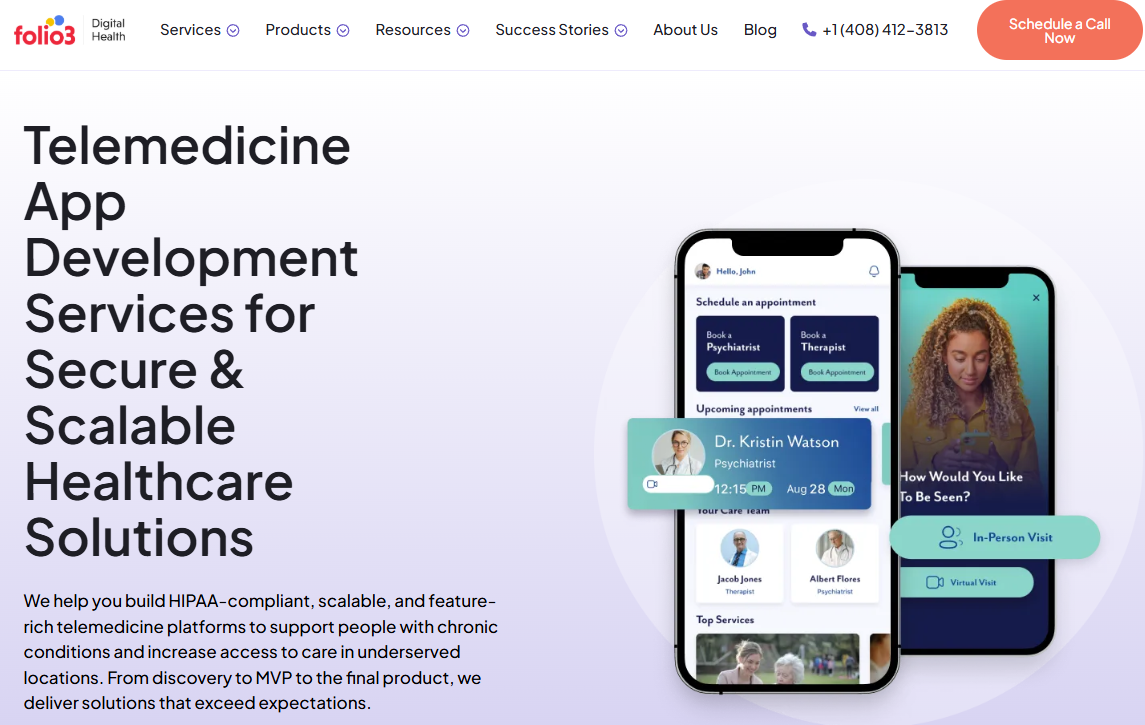
With an end-to-end telemedicine app development service offer, Folio3 focuses on scalability, device integration, and regulatory compliance. Their team has experience delivering HIPAA-compliant platforms that support chronic disease management, mental health services, and enterprise care delivery. Solutions often include appointment scheduling, remote monitoring integrations, secure video conferencing, and patient education hubs.
3. Binariks
Binariks offers custom telemedicine software development with a focus on flexibility, regulatory compliance, and advanced technology stacks. Their services span EHR/EMR integration, virtual consultations, store-and-forward capabilities, and cloud-native development. With expertise in AI/ML, data analytics, and FHIR-based interoperability, Binariks is positioned to help organizations build scalable, HIPAA-compliant platforms that serve both clinical and operational goals.
4. S-PRO
S-PRO offers custom telemedicine app development with a focus on workflow enhancement and patient-provider experience. Their services range from rolling out entirely new solutions to augmenting existing platforms. With capabilities in AI, mobile development, and cloud engineering, S-PRO supports a variety of healthcare clients in building functional and user-centric apps.
5. ScienceSoft
ScienceSoft is a long-established healthcare IT provider with experience delivering telemedicine platforms for large-scale, regulated environments. With a focus on large enterprises, they offer end-to-end services from consulting and architecture planning to software development, compliance, and post-launch support.
Their capabilities include HIPAA-compliant app development, AI-enhanced features, RPM integrations, and custom tools for specialties like neurology, physiotherapy, and mental health. ScienceSoft also emphasizes certifications and regulatory expertise, positioning them well for enterprise clients with complex compliance needs.
Ready for your own custom telehealth software solution? Learn more about our custom software development services.

Dayana Mayfield is a SaaS copywriter and content marketer specializing in SaaS marketing, positioning, and go-to-market strategy. She has consulted for over 195 SaaS companies, focusing on both traffic and conversions. She has been featured in Entrepreneur, Forbes, and Business Insider. Outside of work, Dayana writes SciFi novels and spends her evenings surviving auditions, rehearsals, and tech week as a proud theater mom.