
The startup journey is not easy.
Every startup faces challenges on its journey. Some overcome them and many do not.
The startups that do climb the ranks of success and thrive often share a common trait: they tackle problems head-on with innovative solutions and the right partnerships.
In this blog, we’ll explore seven inspiring startup case studies—from SaaS to eCommerce and mobile apps—that highlight how businesses overcame hurdles, scaled rapidly, and delivered outstanding results. Whether you’re looking for insights, motivation, or an inspirational business model, these real-world stories offer valuable lessons for any entrepreneur aiming to turn a vision into a thriving venture.
Why are case studies important for startups?

Case studies play a pivotal role in helping startups achieve growth and credibility in several ways.
1. Exposure to new audiences
Startup case studies written by third parties, such as media outlets, clients, or partners, introduce your brand to entirely new audiences. This added exposure can significantly boost visibility, credibility, and help businesses establish themselves as thought leaders in their space.
2. Social proof to build trust
When others write about your startup’s achievements, it validates your company’s credibility. Case studies offer concrete examples of problems you’ve solved and the results you’ve delivered, which helps potential clients or investors see your value. This social proof can be particularly impactful for startups working to establish themselves in competitive markets.
3. Powerful marketing material
Case studies double as excellent marketing tools. They can be repurposed into blog posts, sales collateral, email campaigns, and presentations. Unlike generic promotional content, they tell a story, making your achievements more relatable and memorable.
4. Improved working relationships
Collaborating on case studies strengthens relationships with clients and partners. Highlighting their contributions and results not only fosters goodwill but also demonstrates your appreciation for their role in your success. This mutual recognition can lead to long-term partnerships and increased loyalty.
5. Reinforcing overall value
For startups, case studies provide a structured opportunity to analyze and document the impact of their solutions. This reflection helps identify strengths and areas for improvement while reinforcing the overall value you bring to your market. Startups can use this information to refine their offerings, improve client outcomes, and position themselves strategically for future company growth.
If we haven’t convinced you of the importance of case studies yet, check out these examples of startup business case studies.
1. Deel’s rise to global payroll dominance through automation and product-led growth strategy
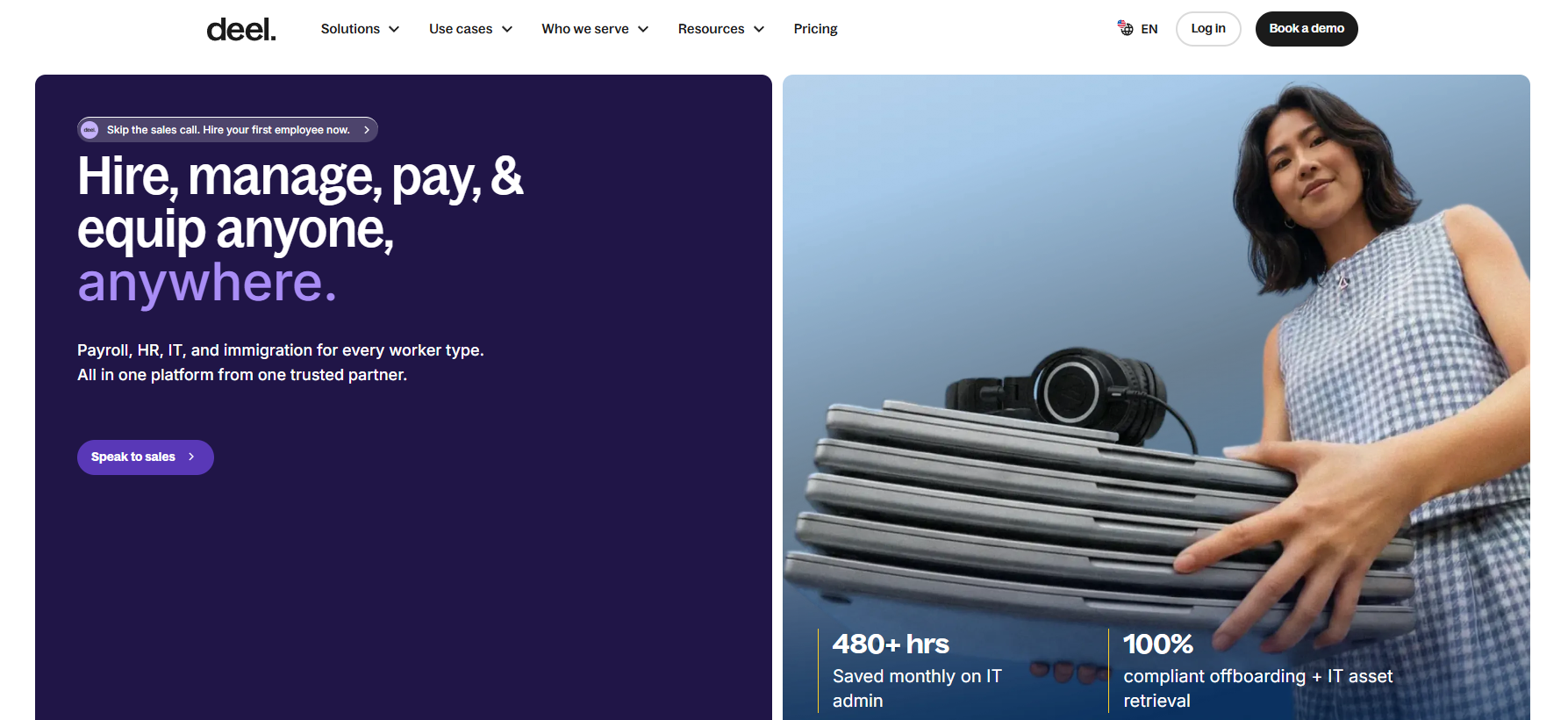
Deel is a global payroll and compliance platform that enables companies to hire and pay employees in over 150 countries through a unified software system.
The problem
As remote work expanded globally, companies faced major operational barriers when hiring international talent. Managing payroll, compliance, and contracts across multiple countries required a patchwork of local vendors, manual processes, and heavy administrative overhead.
This fragmented system slowed down company growth and made it difficult for startups and enterprises alike to scale globally. Traditional providers relied heavily on third parties and human intervention, which introduced delays, inconsistencies, and risk.
The approach
Deel approached this challenge as a full-stack business case study in modern software development. Instead of layering on services, they rebuilt the entire global payroll infrastructure as a software-first platform.
Their growth strategy focused on several key principles:
Vertical integration: Owning the full payroll stack to improve speed, accuracy, and control
Modularity: Allowing customers to adopt individual features and expand over time
Automation: Replacing manual processes with scalable systems
Product-led expansion: Solving immediate problems first, then growing within customer organizations
Deel also demonstrated strategic pivoting in business. Originally launched as a contractor payment platform, the company expanded into employer-of-record services and global payroll as customer demand evolved. This allowed them to capture more value and support broader use cases.
The results
Reached a $12 billion valuation within a few years of launch
Scaled to support 150+ countries on a single platform
Achieved rapid company growth with tens of thousands of customers worldwide
Built a multi-billion-dollar revenue run rate through product-led expansion
Key takeaways
Full-stack ownership: Controlling the entire product stack accelerates company growth and reduces operational risk.
Modular growth strategy: Start small with core features and expand usage over time to increase customer lifetime value.
Automation at scale: Replacing manual processes is essential for managing global complexity.
Strategic pivoting in business: Expanding based on customer demand unlocks new revenue opportunities.
Solving real problems: The strongest startup success stories are built on eliminating critical operational bottlenecks.
Read the full Deel case study.
2. Engine by Starling’s expansion into SaaS banking through strategic pivoting in business
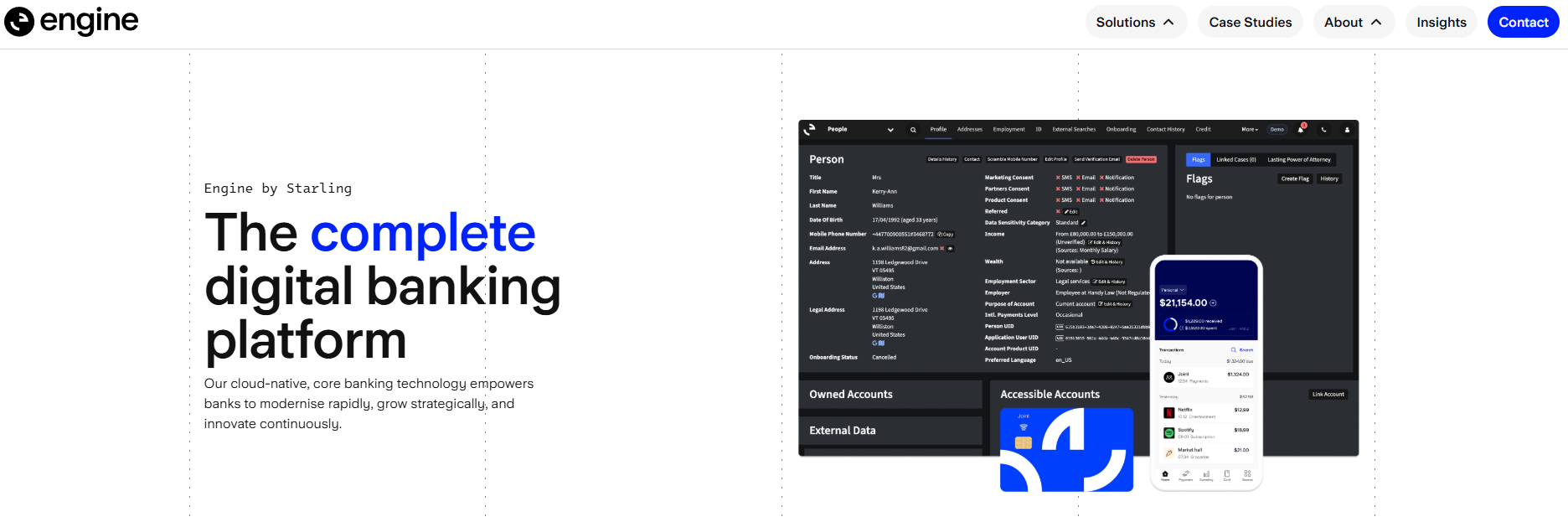
Engine by Starling is the software-as-a-service (SaaS) arm of Starling Bank, designed to provide banks with cloud-native core banking infrastructure.
The problem
Starling Bank had built a modern, cloud-native banking platform for its own operations, enabling rapid innovation and efficient service delivery. However, traditional banks continued to rely on outdated legacy systems that slowed down innovation and limited company growth.
At the same time, Starling recognized that its proprietary technology could solve a much larger industry problem. The challenge was determining how to scale this internal platform into a separate revenue stream without disrupting its core banking business.
The approach
This became a strong business case study in strategic growth. Starling executed a clear growth strategy by spinning out its technology into a standalone SaaS product—Engine by Starling.
Their approach included:
Productizing internal technology: Turning a proven internal platform into a market-ready solution
Targeting legacy institutions: Focusing on banks that needed modernization but lacked in-house capabilities
Building a separate business unit: Allowing Engine to scale independently while leveraging Starling’s expertise
Maintaining cloud-native architecture: Delivering speed, flexibility, and scalability from day one
This move reflects deliberate pivoting in business, shifting from solely operating as a digital bank to also becoming a technology provider.
The results
Successfully launched a new SaaS business line built on proven internal infrastructure
Enabled faster time-to-market for banks adopting modern core systems
Created a scalable platform designed to support multiple financial institutions
Strengthened Starling’s position as both a bank and a technology provider, supporting long-term company growth
Key takeaways
Productizing internal tools: Turning proven systems into SaaS products can unlock new company growth opportunities.
Strategic pivoting in business: Expanding into adjacent markets strengthens long-term positioning.
Focused growth strategy: Targeting industries with clear modernization needs accelerates adoption.
Separation of concerns: Creating independent business units allows each product to scale effectively.
Technology as leverage: Many startup success stories come from reusing internal innovations to solve broader market problems.
Read the full Engine by Starling case study.
3. Alabaster's exponential growth through TikTok: A fulfillment success story
 Alabaster is a company that creates beautifully designed Bibles, blending scripture with art to offer a visually captivating experience.
The problem
In February 2024, Alabaster experienced an unexpected surge in demand due to a viral TikTok video that sustained holiday-level sales well into the new year. This led to inventory shortages and the challenge of fulfilling orders promptly to maintain customer satisfaction.
The approach
To address these challenges, Alabaster partnered with Shipfusion, a third-party logistics provider, months before the surge. Shipfusion's scalable fulfillment model allowed Alabaster to handle the increased order volume efficiently, maintaining TikTok's strict two-day shipping service level agreements (SLAs) for every order..
The results
135% increase in orders: By the end of April, Alabaster shipped as many orders in one month as they had during the entire 2023 holiday peak season.
Maintained shipping SLAs: Shipfusion made sure that every order met TikTok's two-day shipping requirement, helping Alabaster maintain a high shop score and favorable algorithm placement.
Operational efficiency: Despite the unexpected demand, Shipfusion's adaptable fulfillment model managed the surge without hesitation, allowing Alabaster to focus on other aspects of the business.
Key takeaways
Scalable fulfillment solutions are crucial: Partnering with a reliable logistics provider enables businesses to handle unexpected demand surges effectively.
Maintaining platform-specific SLAs is vital: Adhering to shipping requirements promotes favorable algorithm placement and sustained visibility on platforms like TikTok.
Preparation enables opportunity capitalization: Establishing robust operational partnerships before a surge allows businesses to leverage viral moments into sustained growth.
Read the full Alabaster case study
4. Bio Ionic's exponential affiliate sales growth through strategic partnerships
 As a premium hair styling tool company, Bio Ionic is renowned for its award-winning heat tools crafted with top-tier materials and advanced technology.
The problem
While Bio Ionic had achieved initial success through influencer partnerships on platforms like Instagram, TikTok, and YouTube, they faced challenges in scaling these collaborations. Namely, they needed a cost-effective solution for scaling that did not compromise content quality.
The approach
To address this, Bio Ionic collaborated with Versa Marketing, an affiliate program management agency. Versa Marketing implemented several strategies:
Introduced short-term commission increases to boost program engagement and activity.
Focused on a tiered system to prioritize customer acquisition.
Identified and recruited niche affiliates whose audiences aligned with Bio Ionic’s products.
Created attractive product sample bundles for affiliates to utilize in their promotional content.
The results
6,000% year-over-year affiliate program growth
$900,000 annual increase in affiliate sales
Elevated affiliate engagement increased content creation without upfront costs
Key takeaways
Strategic Incentives Drive Engagement: Implementing well-designed commission structures can significantly enhance affiliate participation and sales.
Niche Alignment Enhances Partnerships: Recruiting affiliates whose audiences closely match the product’s target market creates more effective promotions.
Cost-Effective Content Generation: Leveraging a commission-based model facilitates increased content creation without immediate financial outlays.
Read the full Bio Ionic case study
5. Hornby Organic's journey to doubling production efficiency
 Hornby Organic is a Canadian company specializing in the production of certified organic energy bars. They are committed to delivering affordable organic food without compromising the health of people or the planet. Starting out of an old garage, thay have become the first Canadian company to produce a Canadian Certified Organic energy bar.
The problem
As Hornby Organic expanded, they faced challenges in managing production efficiently and ensuring regulatory compliance. Relying on spreadsheets for inventory and batch tracking became cumbersome, leading to difficulties in:
Achieving end-to-end traceability from raw ingredients to finished products.
Maintaining accurate inventory for batch planning and warehousing.
Handling an increasing volume of sales orders from their online store and retail partners.
The approach
Hornby Organic implemented Katana, a manufacturing software solution designed to streamline operations. With Katana they were provided with:
A unified platform replacing multiple spreadsheets, integrating seamlessly with their Shopify store and accounting software.
Enhanced traceability features, crucial for meeting food safety standards and regulatory requirements.
Real-time visibility into sales orders across various channels, enabling automatic production initiation and accurate stock level monitoring.
The results
Improved on-time order fulfillment by nearly 60%, reducing delays and maintaining better customer satisfaction.
Optimized raw material and finished goods inventory by 30%, minimizing waste and enhancing inventory management.
Increased the efficiency of day-to-day operations by up to 40%, freeing up resources for strategic growth.
Overall improvement of production efficiency by 100%.
Key takeaways
Integrated solutions enhance traceability: Utilizing specialized software helps efficiently maintain compliance with industry regulations.
Automation reduces manual workload: Implementing automated systems decreases administrative burdens.
Scalable tools support growth: Adopting adaptable software facilitates efficient scaling of production operations.
Read the full Hornby Organic case study
6. ParentPulse's rapid market entry with DevSquad
 ParentPulse is a survey and parent experience platform designed for Christian schools, offering tools like survey questions, Net Promoter Score (NPS) ratings, and experience benchmarks to help schools assess parent satisfaction, boost retention, and plan strategically.
The problem
Founder Ryan Ermeling aimed to develop his first SaaS product that would deliver significant value to Christian schools without being feature-heavy. He sought to launch quickly to gather customer feedback and generate revenue, necessitating a development partner capable of guiding him through the process efficiently.
The approach
Ryan partnered with DevSquad, engaging in their design sprint process to refine the product strategy and design. This collaborative approach involved:
Conducting workshops to align on goals and vision.
Rapid prototyping to visualize the product concept.
User testing to validate ideas and gather feedback.
Iterative design to enhance the product based on insights.
For development, DevSquad utilized Laravel to build a lightweight, scalable, and modular product, ensuring flexibility for future enhancements.
The results
MVP launched in under 4 months: Enabled swift market entry to test the concept and start revenue generation.
Bootstrapped to profitability: Achieved financial sustainability without external funding.
Ongoing feature development: Implemented a dual-track agile process, running discovery sprints for new features alongside development sprints to maintain and upgrade the product.
Key takeaways
Collaborative design sprints accelerate development: Engaging in structured workshops and prototyping facilitates rapid product refinement.
Modular architecture supports scalability: Building with scalability in mind allows for seamless future enhancements.
Integrated strategy, design, and development control costs: Housing all aspects under one roof creates a cohesive progress and budget management.
Read the full ParentPulse case study
7. BP Logix's lead generation transformation with KlientBoost
 BP Logix is a provider of business process management (BPM) solutions, offering tools that enable organizations to automate and optimize their workflows for improved efficiency.
The problem
BP Logix faced challenges in driving consistent, high-quality leads through their pay-per-click (PPC) advertising efforts. Early results from paid search channels did not deliver the desired impact, leaving room for improvement in both lead volume and conversion quality.
The approach
To overcome this, BP Logix partnered with KlientBoost, a performance marketing agency specializing in PPC and social media campaigns. The partnership focused on a comprehensive strategy that included:
Audience targeting adjustments to refine and reach ideal customer profiles.
Creation of a new gated offer to drive engagement.
Development of lead generation forms to streamline the conversion process.
A/B testing of ad copy and creatives to optimize performance.
The results
3214% increase in conversion rate
900% increase in conversions
69% decrease in cost per acquisition (CPA)
22% increase in click-through rate (CTR)
Key takeaways
Precise targeting drives results: Audience adjustments make sure campaigns reach the right customers effectively.
Testing is key to optimization: A/B testing of creatives and copy helps refine messaging for maximum engagement.
Innovative offers enhance conversions: Gated offers and tailored lead generation forms streamline the user journey.
Read the full BP Logix case study
8. SuccessCoaching.co's lead generation enhancement through automated outreach
 As a leader in customer success training, SuccessCoaching.co empowers organizations to enhance customer engagement and retention strategies. They provide comprehensive training programs, workshops, and resources designed to help businesses adopt proven customer success methodologies.
The problem
The company primarily relied on inbound leads for the enterprise segment of their business. They needed a more efficient system to automate outreach efforts, identify and prioritize target accounts, track website visitors, and leverage various lead sources to maximize sales opportunities.
The approach
To deal with these challenges, SuccessCoaching.co partnered with SaaSBoost.io, an Apollo.io certified agency partner. The comprehensive solution included:
Building a custom Apollo.io instance to manage outbound efforts, including a custom account scoring model to prioritize target accounts, personas, sequences with dynamic variables and conditional logic for personalization, and workflows to automate outreach.
Developing a scalable cold email infrastructure to enhance outreach efficiency.
Integrating with HubSpot to create a smooth data flow between systems, allowing for streamlined lead tracking and enrichment.
Incorporating diverse lead data sources, such as Apollo website visitor identification, intent data, and targeted lists from platforms like G2.
Training sales and SDR teams on best practices for utilizing Apollo.io effectively.
The results
$750,000+ sales pipeline created: The new system built a strong sales pipeline, unlocking growth opportunities with major enterprises such as Avaya, Microsoft, and Salesforce, as well as emerging startups.
Six-figure closed deals: Successfully converted leads into substantial revenue.
62 open opportunities: Established a significant number of ongoing engagements.
Key takeaways
Automated outreach amplifies lead generation: Implementing a tailored Apollo.io instance streamlined outbound efforts, resulting in a substantial sales pipeline.
System integration enhances efficiency: Seamless data flow between Apollo.io and HubSpot facilitated effective lead tracking and management.
Diverse data sources enrich lead quality: Utilizing various lead data sources, including intent data and targeted lists, improved the precision of outreach efforts.
Read the full SuccessCoaching.co case study
9. Planta's growth through seasonal Apple Search Ads strategy
 Planta is a mobile application that assists users in identifying houseplants and provides timely notifications for watering, fertilizing, misting, and cleaning. It also offers features to diagnose plant diseases and recommend optimal lighting conditions.
The problem
Operating in the competitive plant care category, Planta faced increased competition for Apple Search Ads (ASA) during peak seasons. The company aimed to capitalize on seasonal spikes in search volume to acquire users efficiently while maintaining a favorable return on investment (ROI) and controlling cost per install (CPI).
The approach
To solve this challenge, Planta collaborated with Phiture, a mobile growth consultancy, to revamp user acquisition strategies in the U.S. market. The comprehensive approach included:
Conducting thorough market research in November and December to understand the plant care category, monitor competitors, and identify areas for improvement.
Tweaking existing campaign structures, expanding keyword lists, and optimizing keyword performance to enhance relevance and reach.
Introducing Discovery and Probing campaigns to broaden the generic keyword list, anticipating increased search volumes.
Developing Custom Product Pages (CPPs) to highlight various app features, appealing to diverse user segments.
Testing different ASA placements, including the "Search Tab" and "Product Pages," to identify cost-efficient scaling opportunities.
Maintaining open communication with Planta to align on blended targets and Return on Ad Spend (ROAS), informing bidding strategies to keep campaigns profitable.
Developing internal automated reports to monitor lower funnel performance, ensuring sustainable growth.
The results
380% year-over-year increase in ASA spend: From January to July, investment in ASA campaigns increased substantially.
335% year-over-year increase in installs: From January to July, installs grew significantly in correlation to the targeted ASA..
Cost-efficient scaling: The strategic use of CPPs and new ASA placements facilitated cost-effective campaign expansion.
Key takeaways
Seasonal preparation enhances growth: Conducting market research during low-demand periods allows for strategic planning and optimization ahead of peak seasons.
Diversified campaign strategies drive user acquisition: Implementing various campaign types and placements can effectively capture increased search volumes.
Collaborative communication correlates with profitability: Maintaining open dialogue between teams aligns goals and informs strategies, leading to successful and profitable campaigns.
Read the full Planta case study
Partner with the right team and become a success story
What do all these successful startups have in common?
They achieved growth and overcame challenges by working with the right partners. Whether it was optimizing marketing strategies, streamlining operations, or scaling their reach, each case study highlights how collaboration with experts helped transform obstacles into opportunities.
When it comes to software development, having the right partner is paramount. Building a reliable, scalable product that users love requires a team that understands your goals and adapts to your needs.
Al DevSquad we take a unique approach to software development, partnering with you to create solutions tailored to your business. From our Sprint Zero workshop—which is where we make sure you’re building the right product the first time—to our dedicated product development teams, we work to deliver high-quality software that supports your growth. Our agile methodology keeps you involved every step of the way, allowing us to adapt quickly and deliver real value.
Are you building a SaaS startup? Learn more about our SaaS development process.
Frequently asked questions (FAQs)
A startup business case study is a real-world example that shows how a company solved a problem, executed a growth strategy, and achieved results. It matters because it provides proof, not theory. Founders can learn what worked, what didn’t, and how decisions impacted company growth. These insights help startups avoid costly mistakes and make smarter product and operational decisions.
Startup success stories highlight proven paths to company growth by showcasing effective strategies, partnerships, and execution. They offer practical insights into scaling products, entering new markets, and improving operations. By studying these examples, founders can identify patterns and apply similar growth strategies to their own businesses, reducing risk and accelerating progress toward measurable outcomes.
A clear growth strategy guides how a startup acquires users, builds its product, and scales operations. Without it, teams often waste time on features or markets that don’t deliver results. The most successful startups align product development, marketing, and sales around a focused plan. This alignment creates momentum, supports company growth, and increases the likelihood of long-term success.
Pivoting in business becomes necessary when there’s clear evidence that the current approach isn’t delivering results. This could include low customer adoption, weak revenue growth, or shifting market demand. The best startups treat pivoting as a strategic decision, not a failure. By responding to real user feedback, they refine their direction and unlock new opportunities for company growth.
Startups often struggle with unclear product direction, inefficient processes, and scaling too quickly without the right infrastructure. Other common challenges include limited resources, technical debt, and difficulty prioritizing features. These issues can stall company growth if not addressed early. Successful teams focus on solving core user problems, streamlining operations, and building systems that support long-term scalability.
The right development partner brings expertise in product strategy, UX, and scalable architecture. Instead of just building features, they help prioritize what matters most for growth. This reduces wasted time and ensures faster launches. Strong partners also support ongoing iteration, allowing startups to adapt quickly and improve based on user feedback, which is essential for sustained company growth and long-term success.

Dayana Mayfield is a SaaS copywriter and content marketer specializing in SaaS marketing, positioning, and go-to-market strategy. She has consulted for over 195 SaaS companies, focusing on both traffic and conversions. She has been featured in Entrepreneur, Forbes, and Business Insider. Outside of work, Dayana writes SciFi novels and spends her evenings surviving auditions, rehearsals, and tech week as a proud theater mom.