




Eliminate Data Silos.
Make AI Smarter.
OLD WAY
Data Silos

Every system keeps its own version of the truth
The CRM says one number, the ERP another, and the spreadsheet a third. Nobody knows which one is right.
Reports are built by hand, every month
Someone exports the CSVs, pastes them into the workbook, and hopes the formulas held. Then does it again next month.
You find out at month-end
Problems surface weeks after they happen, once the close is done and the window to act has shut.
Nobody trusts the dashboard
The BI tool is there. Its numbers don't match finance, so everyone goes back to their own spreadsheet.
AI can't help you yet
Every AI tool you try hits the same wall: data that's scattered, stale, and inconsistent.
NEW WAY
One Data Layer

One set of numbers everyone uses
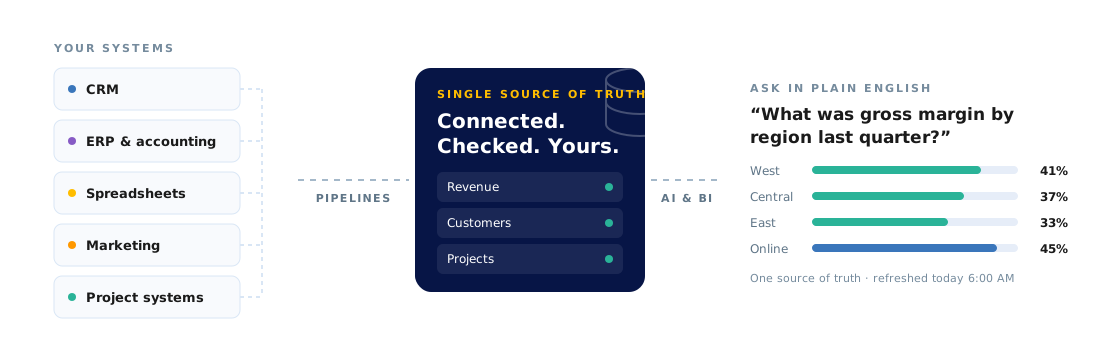
Every system feeds one central place. One definition of revenue, one customer list, one answer.
Reports that build themselves
The data updates itself, on a schedule. The month-end workbook disappears, and so does the person feeding it.
You know the same day
You get a heads-up the day something breaks or a number looks off, not at close.
Dashboards finance will sign off on
The math is set once, so every number matches the books.
AI that actually works
Clean, connected data is what AI runs on. Ask questions in plain English and get answers you can trust.

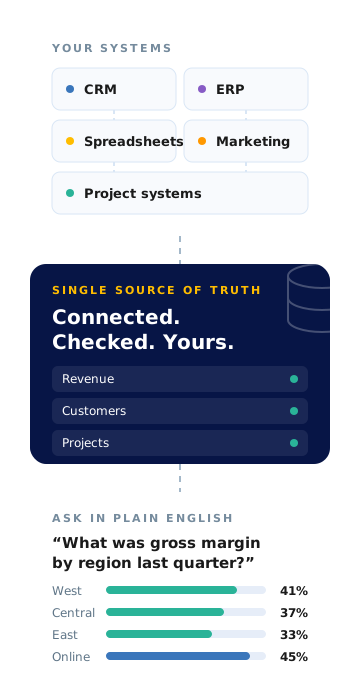
Your numbers live in nine places. Your answers should live in one. We connect every system you run on into a single data layer, so every report, every dashboard and every question pulls from the same truth.
What we build

Data Pipelines & ETL
Automated processes that extract data from your source systems, transform it, and load it into a central repository on a defined schedule. Built for reliability, with monitoring so issues surface immediately instead of at month-end.

Cloud Data Warehouses
Design and implementation of a secure, central data platform in the cloud. We select and configure the right option based on your scale, existing stack, budget, and team capabilities — without locking you into a single vendor.

Data Integration
Connect CRM, ERP, operational systems, marketing platforms, and third-party sources into one consistent data layer. We establish shared definitions so a customer, order, or invoice means the same thing across systems.

Orchestration & Monitoring
Scheduling, dependency management, and alerting so pipelines run in the correct order without manual intervention. Failures or data quality issues trigger alerts the same day, not when reports are due.

Data Modeling
Organize raw data into structured models aligned with how the business operates. Establish clear, consistent definitions for key metrics (revenue, margin, customer, etc.) so every report and analysis uses the same logic.

Migration & Modernization
Move from legacy databases, on-premise warehouses, or spreadsheet-based processes to a modern cloud environment. Preserve historical data and minimize disruption to ongoing operations.
Frequently Asked Questions
Data engineering is the work of connecting all the systems and spreadsheets your business already runs on and bringing that information into one trusted place. Right now your numbers live in different tools and often don’t match. Data engineering fixes that so your team (and your AI) can finally see a clear, consistent picture of the business. It’s the foundation that makes dashboards and AI actually useful instead of unreliable.
We use the best tool for the job based on your existing systems, budget, and team. We’re not locked into any one platform. We choose what fits your situation so the solution works well for you long-term, without forcing you into a tool that doesn’t make sense for your business.
Most of our clients start exactly like that. We connect the systems you already use — your accounting software, project tools, spreadsheets, CRM — and bring them into one place. You don’t have to replace anything to get started.
A focused project connecting 3–5 systems typically takes 8–12 weeks. Larger projects with more sources and complexity can take 3–6 months. We deliver in phases so you see working results early — usually the first trusted dashboard or AI answer within the first few weeks.
AI tools are trained on public information that has nothing to do with your company. They can sound smart, but they don’t know how your business actually runs. When we connect your systems and bring in your historical data, the AI stops answering from general knowledge and starts answering from how your company has actually operated for the last 10, 15, or 20 years. That’s the difference between generic advice and real insight.
A lot. Right now, AI is guessing based on what it was trained on. After the foundation is in place, it can see patterns across your actual projects, margins, customers, and operations over time. It can answer questions like “Which types of jobs have consistently run over margin for us?” or “What happened the last three times we had a similar slowdown?” — using your numbers, not industry averages. Clients usually describe it as going from an AI that talks in generalities to one that actually knows their business.
Yes. In the AI era, your own data is the real advantage. Anyone can buy the same AI tools. The companies that get real results are the ones that give the AI deep context on how their business runs. This foundation turns AI from a generic tool into something that has years of your actual history and can act like a coworker who already understands the company. Without it, most AI projects stay surface-level and don’t deliver clear returns.
No. We work with what you already have. The goal is to connect your existing systems so your team (and your AI) can finally see everything in one place — not to rip out tools that are working.
We start by mapping every system and spreadsheet your numbers live in. Then we show you a clear plan for one trusted place for all that data. Most clients see their first working dashboard or AI answer within that window.
Ready to break down the Data Silos?
Book a strategy call. We’ll look at the systems you run on and show you what one source of truth could look like for your business.

